

 English
 Español
 عربى
عربى
Down Comforter Guide: Types, Standards, and How to Wash Down at Home
2026-04-29
Content
Down vs Alternative Down: What Is the Difference?
Down and alternative down comforters occupy the same category on the shelf but are fundamentally different products. Understanding what separates them makes it easier to choose the right fill for your climate, budget, and personal preferences.
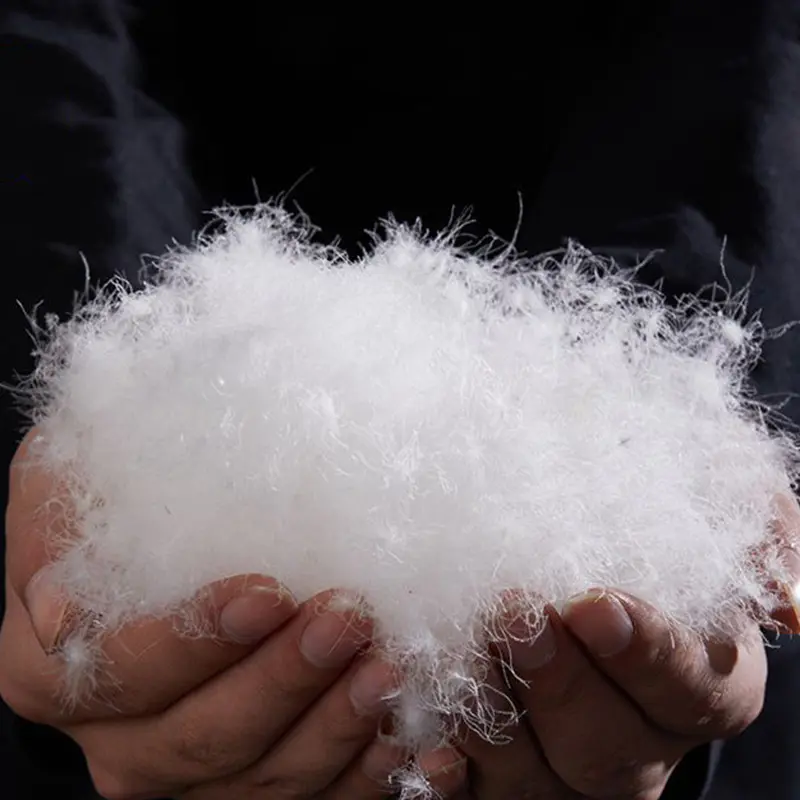
Natural down is the soft, fluffy cluster found beneath the outer feathers of ducks and geese. Unlike feathers, which have a rigid quill, down clusters have no quill — they are three-dimensional, branching structures that trap air exceptionally well. This trapped air is what provides insulation. The warmth-to-weight ratio of natural down is still unmatched by any synthetic material: a high-quality goose down comforter can provide significant warmth at less than half the weight of a comparable synthetic fill.
Alternative down (also called down alternative or synthetic down) is made from polyester microfibers engineered to mimic the loft and softness of natural down clusters. The fibers are crimped, hollowed, or siliconized to improve their resilience and insulating ability. Modern alternative down fills — particularly those using fine-denier or cluster-fiber constructions — have narrowed the performance gap with natural down considerably, though they remain heavier for the same warmth level and compress less efficiently for storage and travel.
Key Differences at a Glance
| Factor | Natural Down | Alternative Down |
|---|---|---|
| Warmth-to-weight ratio | Excellent | Good |
| Compressibility | Very high | Moderate |
| Allergen risk | Low–moderate (varies by processing) | Very low |
| Moisture management | Absorbs moisture; slower drying | Dries faster; hydrophobic |
| Longevity | 10–20+ years with care | 3–8 years typical |
| Price range | Higher | Lower to mid-range |
| Ease of washing | Requires care; longer drying | More forgiving; machine washable |
| Ethical sourcing concern | Yes — look for RDS certification | No animal sourcing |
For hot sleepers, alternative down is often the better choice: synthetic fills do not retain body heat as efficiently, and their faster moisture-wicking properties reduce that overheated feeling. For cold climates or those who want maximum warmth at minimal weight — particularly useful in winter or in poorly insulated rooms — natural goose down remains the benchmark.
Goose Down Fiber vs Goose Down: Understanding Fill Types
Not all goose down products contain the same material, and the distinction between goose down clusters and goose down fiber has a meaningful impact on warmth, loft, and durability.
Goose down clusters are the intact, three-dimensional plumes harvested from the underbelly of the bird. Each cluster is a single unit with multiple filaments radiating from a central point, creating a spherical structure that traps large volumes of air relative to its weight. The quality of down clusters is measured by fill power — the number of cubic inches one ounce of down occupies when allowed to loft freely. Premium goose down runs from 600 to 800+ fill power; ultra-premium Siberian or Hungarian goose down can exceed 900 fill power.
Goose down fiber refers to the smaller, broken, or immature filaments that separate from clusters during processing. These fibers are flatter and less lofty than intact clusters and provide noticeably less insulation per unit weight. Products labeled "goose down fiber fill" or "down fiber" are using a lower grade of material. While still softer than standard polyester, goose down fiber fill performs more like a mid-range synthetic than a genuine cluster-down product. Always check whether a product specifies cluster down and states a fill power figure — if neither is mentioned, the fill is likely fiber or a low-grade cluster blend.
Duck down is also widely used and is a legitimate fill material, but goose down clusters are generally larger, loftier, and more durable — which is why goose down commands a price premium. The difference becomes most apparent after repeated washing: high-quality goose down clusters recover their loft readily, while duck down and fiber fills tend to mat and flatten more quickly over time.
What Is the Responsible Down Standard?
The Responsible Down Standard (RDS) is an independent, third-party certification developed by Textile Exchange that verifies the ethical treatment of ducks and geese throughout the down supply chain — from farm to finished product.
RDS certification requires that certified farms meet strict welfare criteria: animals must not be live-plucked or force-fed at any point, and they must have continuous access to food, water, and shelter. The standard applies traceability requirements at every stage of processing, meaning the down in a certified product can be traced back to certified farms. Both the Textile Exchange and the Control Union audit farms and processing facilities annually to maintain certification validity.
For consumers, RDS certification is currently the most credible available signal of responsible sourcing in the down industry. The Global Traceable Down Standard (Global TDS) is a comparable alternative operated by NSF International, with similarly rigorous farm-level auditing. Products bearing either certification label have been verified against a defined standard — unlike marketing claims such as "humanely sourced" or "ethically harvested," which carry no third-party verification requirement and are largely unregulated.
RDS does not guarantee organic or free-range farming conditions beyond the specific welfare prohibitions (no live plucking, no force feeding). If broader environmental or organic standards matter, look for additional certifications such as the Global Organic Textile Standard (GOTS) alongside RDS.
How to Wash a Down Comforter at Home
Down comforters can be washed at home successfully, but the process requires more attention than standard bedding. The primary risks are detergent residue stripping the natural oils from down clusters, and incomplete drying causing mildew or permanent clumping. Done correctly, home washing extends the life of a down comforter and restores its loft.
Before You Start: Check the Care Label
Always check the manufacturer's care label before washing. Most down comforters are machine washable, but some — particularly those with silk shells, high-thread-count cotton casings, or stitched baffles using heat-sensitive adhesives — may be dry-clean only. If the label specifies dry cleaning, do not attempt home washing; the shell fabric or internal construction may not survive agitation and heat.
For machine-washable comforters, confirm your washing machine drum is large enough. A standard queen-size down comforter requires a drum capacity of at least 8–9 kg (18–20 lbs). In a drum that is too small, the comforter cannot agitate freely, and the fill will wash unevenly. A front-loading washer at a laundromat is often the best option for larger comforters, as top-loaders with central agitators can stress the shell seams during washing.
Washing Instructions: Step by Step
- Inspect the comforter for any rips, loose seams, or holes in the shell. Repair these before washing — a small tear will become a large one under agitation, releasing fill into the drum.
- Use a down-specific or gentle liquid detergent in a reduced quantity — roughly half the amount you would use for a standard load. Down wash products such as Nikwax Down Wash or Granger's Down Wash are formulated to clean without stripping the natural oils that keep clusters resilient. Standard detergents, fabric softeners, and bleach should not be used.
- Select a gentle or delicate cycle with cold or warm water (30°C / 86°F maximum). Hot water can damage the shell fabric and cause down clusters to mat.
- Run an extra rinse cycle after the wash cycle completes. Detergent residue left in down causes clumping and reduces loft permanently. A second rinse ensures it is fully removed.
- After the spin cycle, check that the spin speed was low to medium — high-speed spinning can stress shell seams on larger comforters.
Drying a Down Comforter: The Most Important Step
Drying is where most home washing attempts go wrong. Down must be dried completely and thoroughly — even small amounts of residual moisture trapped in clusters will cause mildew growth within days, producing an odor that is extremely difficult to remove.
- Place the comforter in a large-capacity tumble dryer. A domestic dryer that fits the comforter without compression is essential — do not force it into a drum that is too small.
- Set the dryer to low heat. High heat damages down clusters and can scorch or shrink the shell fabric. Low heat takes longer but preserves fill quality.
- Add two or three clean tennis balls or dryer balls to the drum. As the dryer tumbles, these break up wet clumps of down and redistribute fill, restoring loft. Without them, down dries in dense, matted clumps that may never fully re-loft.
- Expect the drying process to take 2–4 hours at low heat for a queen or king comforter. Check every 30–45 minutes, remove the comforter, and manually fluff and redistribute the fill before returning it to the dryer.
- The comforter is fully dry when no cool or damp areas remain anywhere in the fill — particularly in the corners and along the edges, where moisture persists longest. When in doubt, run an additional 30-minute cycle.
- After drying, lay the comforter flat or hang it in a well-ventilated space for several hours before use or storage. This allows any remaining trace moisture to dissipate and gives the clusters time to fully re-loft.
How Often Should a Down Comforter Be Washed?
With regular use of a duvet cover, a down comforter needs washing once or twice per year at most. Washing too frequently degrades the natural oils in down clusters faster than normal use does. The duvet cover takes the brunt of daily contact with skin and body oils and should be laundered every one to two weeks. Spot-clean the comforter shell as needed between full washes using a damp cloth and a small amount of down wash, rather than laundering the entire comforter unnecessarily.
News Center
If you are interested in our products, please consult us
Contact Details
- Address : East 1st Floor, Building 3, No.3 Light Textile Road, Xucun Town, Haining City, Jiaxing City, Zhejiang Province
- Tel: +86-18133691685
- E-mail: [email protected]
Products
Quick Link
News Center
Mobile terminal

