

 English
 Español
 عربى
عربى
Pure White Duck Down: Quality, Fill Power & Processing Guide
2026-08-04
Content
- 1 What Is Pure White Duck Down
- 2 What White Duck Down Is Used For
- 3 How Duck Down Is Processed
- 4 How to Identify High-Quality Duck Down
- 5 What Makes Duck Down Fluffy
- 6 Benefits of Duck Down Filling
- 7 Duck Down Fill Power Explained
- 8 Duck Down vs Duck Feather
- 9 White Duck Down Properties and How Quality Is Measured
What Is Pure White Duck Down
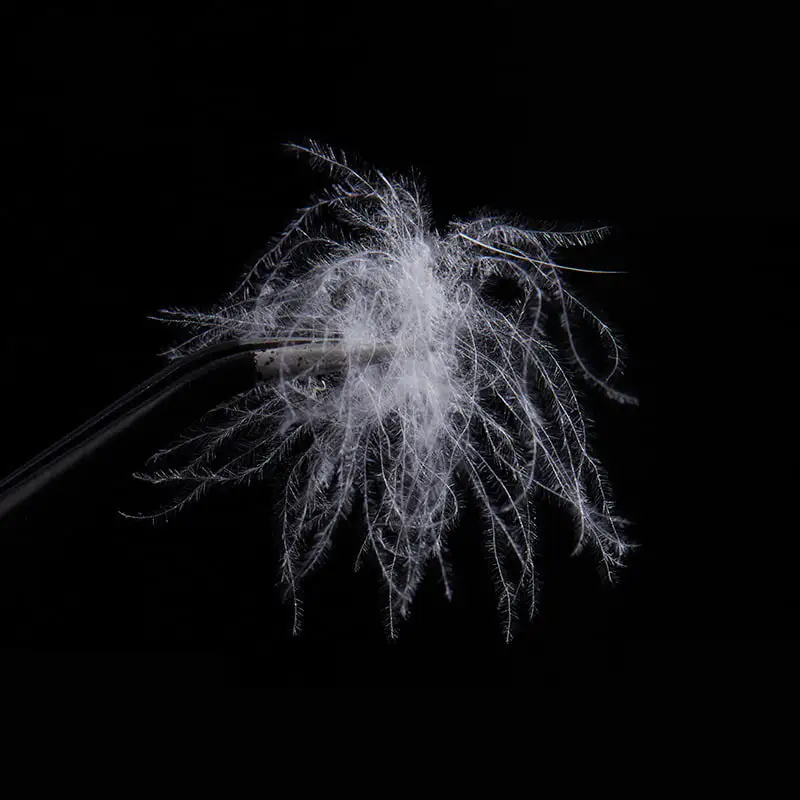
Pure white duck down is the soft, clustered under-plumage harvested from white-feathered duck breeds, used as insulation fill in bedding, outerwear, and cold-weather gear. Unlike feathers, down has no quill — it consists of a small central core with fine, three-dimensional filaments radiating outward, which is what allows it to trap air and provide insulation at a fraction of the weight of synthetic fill.
"Pure white" refers specifically to down sourced from white duck breeds, valued for its clean, consistent color that doesn't show through light-colored shell fabrics the way gray or mixed-color down can. This makes it the preferred fill for premium white bedding and light-colored jackets, where visual consistency matters as much as thermal performance.
What White Duck Down Is Used For
- Bedding: comforters, duvets, and pillows, where down's loft and breathability regulate warmth without excess weight
- Outerwear: winter jackets, parkas, and vests, where high warmth-to-weight ratio matters for mobility and packability
- Sleeping bags: outdoor and expedition gear, where compressibility and low pack weight are critical
- Home textiles: cushions and throws, where down's soft drape and resilience hold shape over repeated use
How Duck Down Is Processed
Raw down goes through several processing stages before it's usable as fill material, each aimed at removing contaminants while preserving the down cluster's natural loft and structure. Washing and sterilization come first, removing dust, oils, and organic residue using high-temperature washing cycles, followed by thorough drying, since any retained moisture leads to odor and clumping in the finished product.
After washing, down goes through a sorting and grading stage that separates down clusters from feathers and quill fragments, typically using an air-based separation process rather than mechanical sorting, since down's light weight and irregular shape make air separation more effective and less damaging to the cluster structure. The final down content percentage and fill power rating are determined at this stage, based on how much pure down cluster remains versus residual feather content.
How to Identify High-Quality Duck Down
Quality assessment for duck down comes down to a handful of measurable and observable characteristics rather than a single "good vs bad" label. Fill power, down content percentage, cleanliness, and odor are the four factors that matter most when evaluating a batch of down or a finished down product.
| Indicator | What It Tells You |
|---|---|
| Fill power | Higher fill power means more loft and insulation per gram of down |
| Down content % | Higher percentage of true down clusters vs feather fragments, indicating better fill quality |
| Cleanliness/turbidity | Lower turbidity in a wash test indicates thorough washing and fewer residual contaminants |
| Odor | Little to no odor indicates proper washing, drying, and sterilization |
Visually, high-quality down clusters appear full, three-dimensional, and springy when compressed and released, rather than flat or matted. Reputable suppliers typically provide lab test reports covering fill power, down content, and cleanliness ratings rather than relying on visual inspection alone.
What Makes Duck Down Fluffy
Down's fluffiness — its loft — comes from the three-dimensional structure of its filaments, which branch outward from a small central point rather than lying flat like a feather's barbs along a central shaft. This structure traps still air between filaments, and trapped air is what provides insulation, so the fluffier and more open the cluster structure, the more air it holds and the warmer it performs relative to its weight.
Processing directly affects retained loft: gentle washing and drying that avoids crushing or matting the clusters preserves their natural springiness, while harsh mechanical handling can flatten filaments and permanently reduce loft even if the down is otherwise clean and high-content. This is why fill power testing — measuring how much volume a fixed weight of down occupies after conditioning — is the standard way to quantify fluffiness rather than relying on a subjective feel test.
Benefits of Duck Down Filling
- High warmth-to-weight ratio: traps significantly more warm air per gram than most synthetic fill alternatives
- Compressibility: packs down small for storage or travel, then recovers loft once uncompressed
- Breathability: the open cluster structure allows moisture vapor to pass through rather than trapping humidity
- Durability: well-processed down retains loft and insulating performance over many years of use with proper care
- Soft drape and feel: conforms to body shape in bedding and outerwear, contributing to comfort beyond pure thermal performance
Duck Down Fill Power Explained
Fill power is a standardized measurement of the volume, in cubic inches, that one ounce of down occupies once it has fully lofted under controlled test conditions. Higher fill power means each ounce of down traps more air, and therefore provides more warmth per unit of weight. Duck down typically ranges from around 550 to 700+ fill power, with higher numbers generally commanding a premium price due to the more consistent, higher-quality raw down clusters required to achieve that loft.
Fill power is distinct from down content percentage — a product can have a high fill power rating but a lower down content percentage if it's blended with feathers, so both figures need to be checked together to fully understand a product's fill quality and expected warmth.
Duck Down vs Duck Feather
| Factor | Duck Down | Duck Feather |
|---|---|---|
| Structure | No quill, three-dimensional cluster of fine filaments | Has a central quill with flat barbs along each side |
| Insulation | Higher, due to greater air-trapping capacity | Lower, flatter structure traps less air |
| Weight | Lighter per unit of warmth provided | Heavier and denser |
| Feel | Soft, springy, no poking through fabric | Firmer, quills can poke through lower-thread-count fabric |
| Typical use | Premium bedding, high-performance outerwear | Lower-cost fill, often blended with down |
White Duck Down Properties and How Quality Is Measured
Duck down quality is measured through a combination of standardized lab tests rather than a single figure, and understanding what each test covers helps in comparing products or supplier claims accurately.
- Fill power test: measures loft volume per ounce under standardized compression and recovery conditions
- Down content analysis: determines the percentage of true down clusters versus feather fragments and other material
- Turbidity test: measures water clarity after washing a down sample, indicating how thoroughly the down was cleaned
- Oxygen number: assesses residual oil and grease content, which affects both cleanliness and odor over time
- Odor test: a sensory evaluation confirming the down has no unpleasant smell after processing
These tests are typically run against recognized standards, and finished products from reputable suppliers usually reference the specific standard and lab report used to certify their fill power and down content claims.
News Center
If you are interested in our products, please consult us
Contact Details
- Address : East 1st Floor, Building 3, No.3 Light Textile Road, Xucun Town, Haining City, Jiaxing City, Zhejiang Province
- Tel: +86-18133691685
- E-mail: [email protected]
Products
Quick Link
News Center
Mobile terminal

