

 English
 Español
 عربى
عربى
What Is Down in a Pillow? Fill Types, Fill Power & How It Sleeps
2026-05-19
Content
The Difference Between Down and Feathers
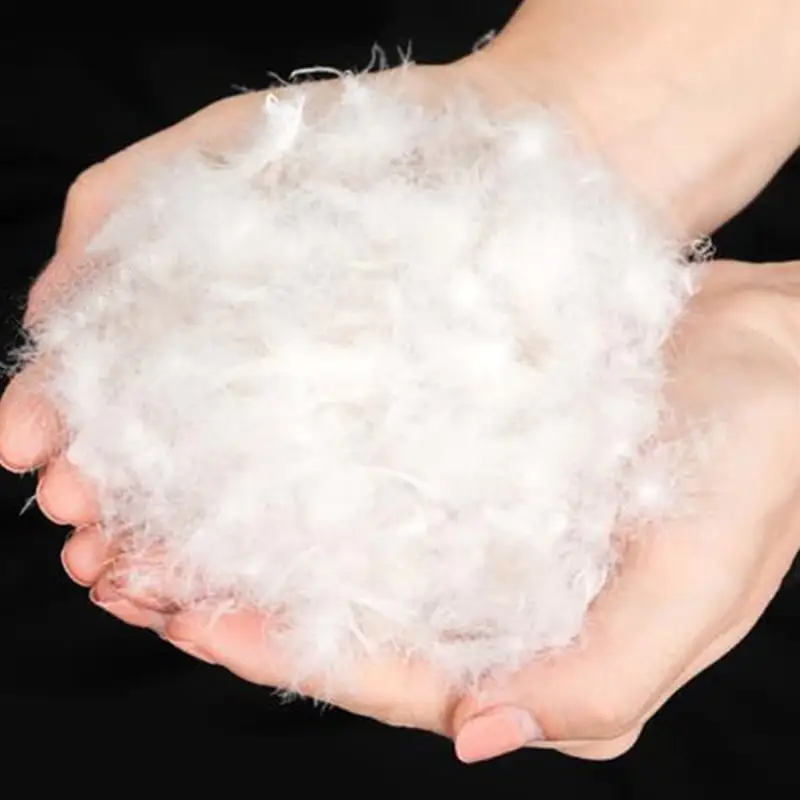
Down in a pillow refers to the soft, fluffy undercoating found beneath the outer feathers of waterfowl — primarily ducks and geese. Unlike feathers, which have a rigid central quill, down clusters consist of fine filaments radiating from a central point with no quill structure. This architecture is what gives down its exceptional loft, compressibility, and insulating properties.
Most pillows labeled "down" actually contain a blend of down clusters and small feathers. A pillow described as 100% down contains only down clusters, while a down and feather pillow mixes both — typically in ratios ranging from 50/50 to 75% feather / 25% down. Higher down content generally means greater softness and a higher price point.
The distinction matters because feathers — with their quills — provide structure and support, while down clusters provide softness and breathability. The ratio in a pillow determines how it sleeps.
Goose Down vs. Duck Down
Both ducks and geese produce down used in pillows, but the two differ in cluster size, fill power, and cost.
Goose down clusters are generally larger, producing higher fill power — the industry measure of loft per ounce. Premium European white goose down (particularly from Hungarian or Polish geese) can reach fill powers of 700–900+, meaning it traps more air and delivers more loft per gram of fill. Goose down is also less likely to carry any odor, as ducks are omnivores whose diet can leave a faint smell in the down.
Duck down clusters are smaller on average and typically produce fill powers in the 550–700 range for quality material. Duck down pillows are more affordable and widely available, and for bedding applications — where the fill power difference translates to a relatively modest softness difference compared to outerwear — many sleepers find duck down entirely adequate.
For most consumers buying a standard pillow, duck down in the 600+ fill power range is a practical and cost-effective choice. Goose down at 700+ is the preference for luxury bedding.
Fill Power: What the Number Means
Fill power is the standard quality metric for down. It measures the volume in cubic inches that one ounce of down occupies when allowed to loft. A fill power of 700 means one ounce of that down expands to fill 700 cubic inches.
For pillows, fill power indicates softness, loft, and how well the pillow recovers its shape after compression. It does not directly indicate warmth in the way it does for duvets. A pillow's feel is also shaped by the fill weight — the total amount of down inside — and the shell thread count, which affects how much the fill compresses or breathes.
| Fill Power Range | Quality Tier | Typical Use |
|---|---|---|
| 300–450 | Entry-level | Budget bedding, mostly feather blends |
| 500–650 | Mid-range | Standard hotel/retail pillows |
| 700–800 | Premium | Luxury bedding, soft loft feel |
| 800+ | Ultra-premium | High-end goose down; exceptional loft |
How Down Behaves as a Pillow Fill
Down pillows are known for their moldability — sleepers can punch, fold, or reshape them to fit the exact contour of their head and neck. This is a defining characteristic that synthetic fills struggle to replicate convincingly. Down conforms rather than pushing back, which many sleepers find more comfortable over long sleep periods.
Down is also highly breathable. Because down clusters trap air rather than forming a solid layer, moisture and heat can move through the fill more freely than through most synthetic alternatives. This makes down pillows a natural choice for sleepers who run warm.
The main limitation is support. Down compresses under the weight of the head and does not spring back like latex or high-resilience foam. Side sleepers and people with neck pain often need either a firmer down pillow with high fill weight, a feather-heavy blend for more structure, or a non-down alternative. Stomach sleepers, conversely, often prefer the low loft that a compressible down pillow provides.
Caring for Down Pillows
Properly maintained down pillows can last 5–10 years. The key care considerations are:
- Washing — Machine wash on a gentle cycle with a mild detergent, no fabric softener (it coats clusters and reduces loft). Front-loading or top-loading machines without agitators are preferred to avoid damaging the shell.
- Drying — Thorough drying is critical. Down holds moisture and can develop mildew if not dried completely. Tumble dry on low with two or three clean tennis balls or dryer balls to break up clumps; expect multiple cycles.
- Pillow protectors — A good pillow protector reduces how often washing is needed and extends shell life significantly. This is especially important for allergy sufferers, as it creates a barrier against dust mite accumulation.
- Fluffing — Daily fluffing redistributes fill and helps the pillow recover loft lost during sleep compression.
Down vs. Down-Alternative Pillows
Down-alternative pillows use synthetic fills — typically polyester microfiber — engineered to mimic the softness and moldability of down. They are hypoallergenic by default, machine-washable without special care, and significantly less expensive.
The trade-off is longevity and feel. Synthetic fills clump and flatten faster than high-quality down, often needing replacement within 2–3 years. They also retain more heat than down, which can be a drawback for warm sleepers. For allergy sufferers or buyers on a strict budget, down-alternative is a practical choice. For those prioritizing long-term value, breathability, and the distinctive moldable feel, genuine down pillows remain the benchmark.
News Center
If you are interested in our products, please consult us
Contact Details
- Address : East 1st Floor, Building 3, No.3 Light Textile Road, Xucun Town, Haining City, Jiaxing City, Zhejiang Province
- Tel: +86-18133691685
- E-mail: [email protected]
Products
Quick Link
News Center
Mobile terminal

