

 English
 Español
 عربى
عربى
Duck Down vs Goose Down: Fill Power & Duvet Buying Guide
2026-07-14
Down quality comes down to two things that get confused constantly: the source (duck versus goose) and the fill power (how efficiently that down traps warmth). Neither one alone tells you whether a duvet will actually keep you warm — the two work together, and understanding how changes what's actually worth paying for.
Content
- 1 Duck Down vs Goose Down: The Core Difference
- 2 Goose Down vs Duck Down Duvet: What to Expect
- 3 Goose Down vs Duck Down Comforter
- 4 Goose Down vs Duck Down Pillow
- 5 Goose Down vs Duck Down Insulation
- 6 What Is Fill Power, Explained
- 7 Does Higher Fill Power Mean Warmer?
- 8 Best Fill Power for a Duvet
- 9 Down vs Feather: Not the Same Material
- 10 Natural Down vs Synthetic Duvet Filling
- 11 How to Choose a Down Duvet
- 12 Best Down Duvet for Cold Sleepers
- 13 Is Goose Down Worth It?
Duck Down vs Goose Down: The Core Difference
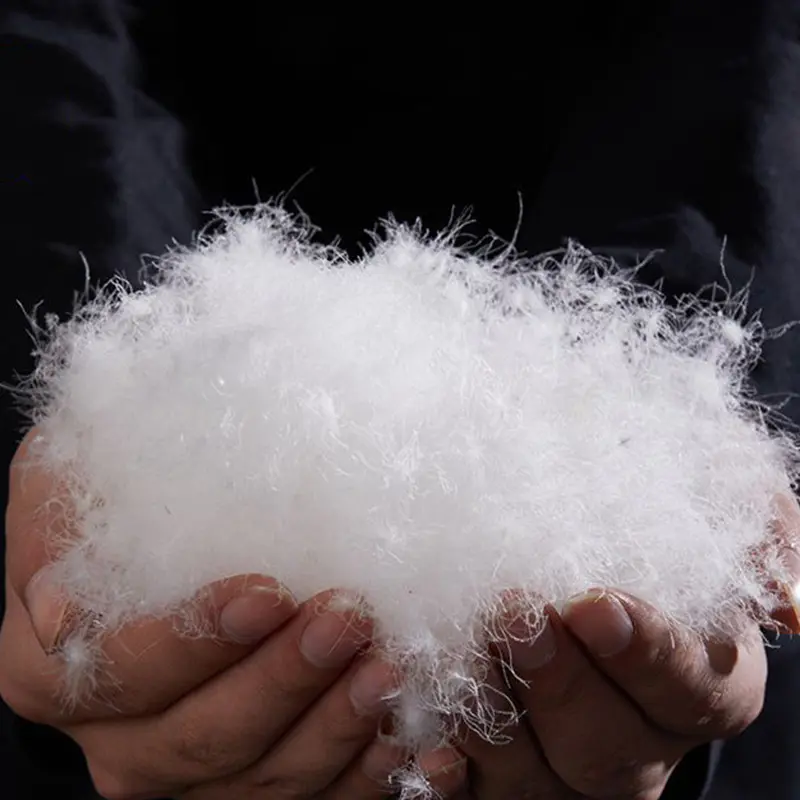
Both are the soft plumage found under a bird's feathers, harvested as a byproduct of the food industry, but they differ in cluster size and structure.
| Factor | Duck Down | Goose Down |
|---|---|---|
| Cluster size | Smaller | Larger — geese are bigger birds with more mature down |
| Typical fill power | 450–650 | 650–900+ |
| Warmth-to-weight ratio | Good | Better — larger clusters trap more air per gram |
| Odor tendency | Slightly more noticeable if not well-washed | Generally milder |
| Price | Lower | Higher |
Goose down generally outperforms duck down at the same weight because larger clusters create more trapped air, but well-processed high-fill-power duck down can still outperform low-grade goose down — the fill power number matters as much as the species.

Goose Down vs Duck Down Duvet: What to Expect
In a duvet specifically, goose down tends to loft higher and feel lighter for the same warmth level, which is why premium duvets lean goose. Duck down duvets are a reasonable mid-range choice, especially at fill powers of 600+, where the performance gap narrows considerably.
Goose Down vs Duck Down Comforter
The terms "duvet" and "comforter" are often used interchangeably, but the down comparison holds either way: goose down comforters compress less over time and tend to hold loft through more wash cycles, while duck down comforters are typically more budget-friendly and still perform well at mid-to-high fill power ratings.
Goose Down vs Duck Down Pillow
Pillows see more direct compression and washing than duvets, so durability matters more here. Goose down pillows hold shape and loft longer under repeated head pressure, while duck down pillows are a solid, more affordable option for buyers who replace pillows every few years anyway rather than expecting decade-long use.
Goose Down vs Duck Down Insulation
Outside of bedding, the same principle applies to jackets and sleeping bags: goose down's larger clusters give better warmth-to-weight performance, which matters most in gear where every gram counts, like backpacking sleeping bags. For general outerwear where weight is less critical, duck down at a solid fill power performs comparably at a lower cost.
What Is Fill Power, Explained
Fill power measures the volume, in cubic inches, that one ounce of down occupies when fully lofted. It's a measure of loft efficiency, not total warmth or total down quantity on its own.
400–500
Entry-level loft, adequate for mild climates or budget bedding.
550–650
Solid mid-range performance — the most common range for quality duck down products.
700–800
High-performance range, typical of quality goose down duvets and jackets.
800–900+
Premium range, mostly mature goose down, prized for maximum warmth at minimum weight.
Does Higher Fill Power Mean Warmer?
Not directly — fill power measures loft efficiency, while total warmth depends on both fill power and total fill weight. A duvet with 800 fill power but low fill weight can be less warm than a 600 fill power duvet with a higher fill weight. Fill power tells you how much warmth you get per gram of down; fill weight tells you how many grams are actually inside.
Best Fill Power for a Duvet
| Sleeper Type / Climate | Recommended Fill Power |
|---|---|
| Warm sleepers / mild climates | 400–500 |
| Average sleepers / moderate climates | 550–650 |
| Cold sleepers / cold climates | 700–800 |
| Very cold sleepers / minimal bulk preferred | 800+ |
Down vs Feather: Not the Same Material
Down and feathers are often bundled together on labels, but they behave differently. Down is the soft, clusterless plumage beneath the outer feathers, with no quill, giving it superior loft and compressibility. Feathers have a rigid quill, add weight and firmness without much added warmth, and are typically blended into lower-cost bedding to reduce price rather than to improve performance. A product labeled "down and feather" is generally a lower-loft, lower-cost alternative to a pure down fill.
Natural Down vs Synthetic Duvet Filling
- Warmth-to-weight: Natural down outperforms synthetic fill of the same weight, which is why synthetic duvets need more fill to match the same warmth level.
- Allergies: Quality synthetic fill is a safer choice for allergy-sensitive sleepers, though modern hypoallergenic down processing has narrowed this gap.
- Moisture handling: Down performs better when dry but loses loft when damp; synthetic fill retains loft better in humid conditions.
- Longevity: Well-cared-for natural down typically outlasts synthetic fill, which compresses and loses loft faster over repeated washes.
- Price: Synthetic fill is generally the more budget-friendly option upfront.
How to Choose a Down Duvet
- Start with your typical room temperature and personal warmth preference rather than the season alone.
- Match fill power to that warmth need using the chart above, not just the highest number available.
- Check fill weight (grams or ounces of down), not just fill power, since both determine total warmth.
- Decide between duck and goose down based on budget — goose at the same fill power costs more but compresses less over years of use.
- Confirm the shell fabric has a tight, down-proof weave to prevent leakage through the seams.
Best Down Duvet for Cold Sleepers
Cold sleepers generally do best with a goose down duvet rated 700+ fill power and a fill weight on the higher end of the manufacturer's range for their duvet size, since this combination maximizes both loft efficiency and total trapped warmth without excessive bulk or weight on the bed.
Is Goose Down Worth It?
For daily, long-term use, goose down is generally worth the added cost if the duvet or pillow will see years of regular use — it holds loft longer, compresses less, and performs better relative to its weight. For occasional-use bedding, guest rooms, or budget-conscious buyers, a well-made duck down product at a solid fill power delivers comparable comfort at a lower price point.
News Center
If you are interested in our products, please consult us
Contact Details
- Address : East 1st Floor, Building 3, No.3 Light Textile Road, Xucun Town, Haining City, Jiaxing City, Zhejiang Province
- Tel: +86-18133691685
- E-mail: [email protected]
Products
Quick Link
News Center
Mobile terminal

