

 English
 Español
 عربى
عربى
Goose Down vs Duck Down Comforter: Which Is Actually Better
2026-07-06
Content
- 1 Goose Down vs Duck Down Comforter: Which Is Actually Better
- 2 Goose Feather vs Down: Understanding What's Actually Inside a Comforter
- 3 What Is Eider Down and Why It Costs So Much
- 4 Waterfowl Down vs Goose Down: How All Down Types Actually Compare
- 5 Goose Down Alternative: When a Non-Down Comforter Makes More Sense
Goose Down vs Duck Down Comforter: Which Is Actually Better
In the debate over goose down vs duck down comforter quality, goose down generally wins on warmth-to-weight ratio and loft, since goose clusters are naturally larger than duck clusters and trap more air per ounce of fill. That extra loft is why higher fill-power comforters, typically anything rated 700 fill power and above, are almost always filled with goose down rather than duck down, since duck clusters rarely reach the size needed to hit those higher fill-power numbers. For anyone prioritizing maximum warmth from the lightest possible comforter, goose down is the more reliable choice.
That said, when people ask which is better duck down or goose down, the honest answer depends heavily on budget and how the comforter will actually be used. Duck down is considerably less expensive to source, since ducks are farmed at much higher volumes than geese, and a well-made duck down comforter at a mid-range fill power can perform very similarly to a goose down comforter for typical bedroom temperatures, without the premium price tag. The performance gap between the two narrows significantly once fill power is matched, meaning a 600 fill-power duck comforter and a 600 fill-power goose comforter will feel far more alike than the species label alone suggests.
One frequently overlooked factor in comparing a goose down vs duck down comforter is odor retention, since duck down has slightly more oil content and can develop a faint smell more noticeably than goose down, particularly in humid climates or without proper airing. Well-processed, properly washed duck down largely eliminates this issue, but it's worth checking manufacturer cleaning specifications before buying a duck-filled comforter for a warm, humid bedroom environment.
Goose Feather vs Down: Understanding What's Actually Inside a Comforter
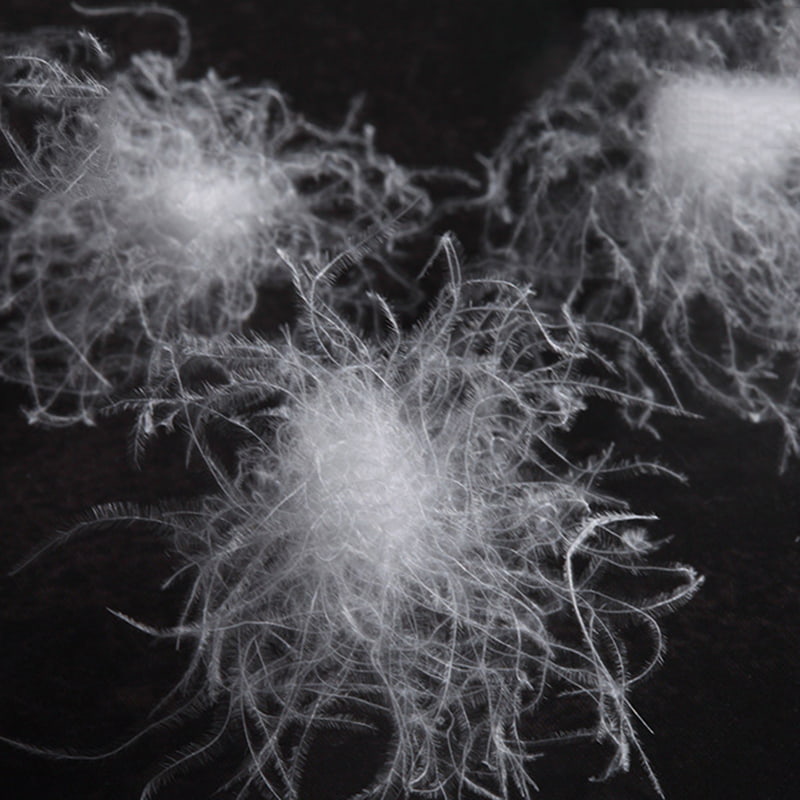
The comparison of goose feather vs down is really a comparison between two entirely different structures harvested from the same bird, rather than a simple quality tier. Down is the soft, three-dimensional cluster found under a goose's outer feathers, with no quill and a plumule structure that traps air extremely efficiently, which is why down clusters are responsible for nearly all of a comforter's insulating power. Feathers, by contrast, have a flat, quilled structure that provides very little loft and adds weight and a scratchy texture rather than warmth.
Because of this structural difference, comforters labeled as pure down, meaning at or near 100% down clusters with no feather content, command a noticeably higher price than blended feather-and-down comforters, since a higher down percentage means better insulation per ounce and a lighter overall product. Budget comforters often mix in 5 to 20 percent small feathers to reduce cost, and while this doesn't ruin performance, it does reduce loft slightly and can occasionally allow a stray quill to poke through the fabric shell over time.
When shopping and comparing goose feather vs down fill content, checking the product label for the specific down-to-feather ratio, rather than relying on marketing terms like "goose down comforter" alone, is the most reliable way to know what's actually inside. A comforter listing 95/5 down-to-feather content will insulate noticeably better than one listing 75/25, even if both are technically made from goose down and feather fill.
What Is Eider Down and Why It Costs So Much
Eiderdown answers the question of what is eider down in a way that immediately explains its extreme price: it's collected from the nests of wild eider ducks in Iceland, Scandinavia, and parts of Canada, gathered by hand after the ducklings have left the nest rather than harvested from farmed birds at all. Eiderdown clusters are exceptionally fine, light, and warm, with a natural stickiness that helps the material cling together and trap heat even more effectively than premium goose down, but the labor-intensive, entirely wild-sourced collection process is what truly separates it from every other down type.
In terms of how much does eiderdown cost, raw eiderdown itself often sells for several thousand dollars per kilogram, and a finished eiderdown comforter or duvet can run anywhere from several thousand to well over ten thousand dollars depending on size and down weight, making it one of the most expensive bedding materials in the world by a wide margin. This price reflects genuine scarcity rather than marketing, since global eiderdown supply is limited to a small number of licensed collectors working under strict conservation regulations that protect wild eider duck populations.
Given the cost, eiderdown comforters are a niche, luxury purchase rather than a practical option for most households, and the significant price difference between eiderdown and standard goose down doesn't translate into a proportional difference in everyday sleep comfort. For nearly all buyers, a high fill-power goose down comforter delivers the vast majority of the warmth and comfort eiderdown offers, at a small fraction of the price.
| Down Type | Typical Fill Power | Relative Cost |
|---|---|---|
| Duck Down | 550–700 | $ |
| Goose Down | 650–850 | $$ |
| Eiderdown | Not rated on standard scale | $$$$$ |
General fill power and relative cost ranges across common down types used in comforters.
Waterfowl Down vs Goose Down: How All Down Types Actually Compare
The term waterfowl down is actually a broader category that goose down and duck down both fall under, so comparing waterfowl down vs goose down is really a question of category versus specific species rather than two competing materials. Waterfowl down includes down from any water bird, most commonly geese and ducks, but also rarer sources like eider ducks, and all waterfowl down shares the same basic three-dimensional cluster structure that distinguishes true down from flat feathers, regardless of which bird it came from.
Within that waterfowl category, goose down consistently outperforms duck down on average cluster size and achievable fill power, which is why premium comforters lean toward goose down specifically rather than simply labeling themselves as waterfowl down. Manufacturers that use the generic "waterfowl down" label without specifying species are sometimes blending duck and goose down together, so checking for a specific species breakdown on the label is worthwhile for buyers who want to know exactly what ratio of goose to duck down they're paying for.
Ultimately, whether comparing goose down vs duck down comforter options directly or evaluating waterfowl down vs goose down more broadly, fill power and cluster percentage remain far more reliable indicators of real-world warmth and quality than the species name alone. Two comforters both labeled "waterfowl down" can perform very differently depending on their actual duck-to-goose ratio and overall down percentage.
Goose Down Alternative: When a Non-Down Comforter Makes More Sense
A goose down alternative comforter uses synthetic microfiber clusters engineered to mimic the loft and softness of real down, without any animal-derived fill, making it the practical choice for anyone with down allergies, ethical concerns about down sourcing, or a preference for machine-washable bedding that doesn't require the specialized care real down comforters need. Modern down alternative fills have closed much of the performance gap with real down over recent years, offering comparable softness and warmth for a noticeably lower price.
The main tradeoffs with a goose down alternative come down to weight and long-term durability rather than initial comfort: synthetic fill is generally heavier than natural down for an equivalent warmth level, and it tends to compress and lose loft faster over repeated washing compared to well-cared-for goose or duck down, meaning a down alternative comforter typically needs replacing sooner than a genuine down one. For a primary bedroom comforter used year-round, this shorter lifespan is worth factoring into the overall cost comparison, not just the upfront purchase price.
For buyers weighing a goose down vs duck down comforter against a synthetic option, the decision often comes down to lifestyle rather than pure performance: frequent washing, allergy sensitivity, or budget constraints point toward a down alternative, while buyers seeking maximum longevity and the best possible warmth-to-weight ratio are generally better served by natural down, whether that's duck, goose, or in rare cases, eiderdown.
News Center
If you are interested in our products, please consult us
Contact Details
- Address : East 1st Floor, Building 3, No.3 Light Textile Road, Xucun Town, Haining City, Jiaxing City, Zhejiang Province
- Tel: +86-18133691685
- E-mail: [email protected]
Products
Quick Link
News Center
Mobile terminal

