

 English
 Español
 عربى
عربى
Home / News / Industry News / Goose Down vs Duck Down vs Eiderdown vs Down Alternative: Full Comparison

Goose Down vs Duck Down vs Eiderdown vs Down Alternative: Full Comparison
2026-06-15
Content
- 1 What Is Down, and What Makes One Type Better Than Another
- 2 Goose Down vs. Duck Down: Which Is Better
- 3
- 4 What Is an Eiderdown — and Is It Worth the Money
- 5 Goose Down vs. Down Alternative: How They Actually Compare
- 6 Practical Buying Guide: Matching Fill Type to Use Case
- 7 Label Claims to Verify Before Buying
What Is Down, and What Makes One Type Better Than Another
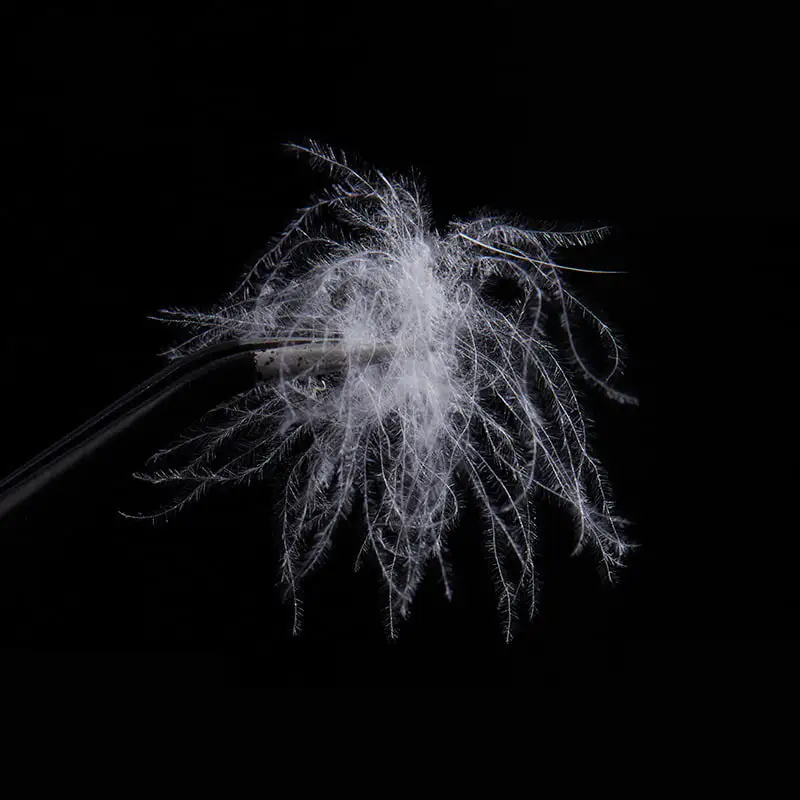
Down is the soft, fluffy under-plumage found beneath the outer feathers of waterfowl. Unlike feathers, which have a rigid quill and flat vane, a down cluster has no central shaft — it is a three-dimensional, spherical structure of interlocking filaments that trap air and resist compression. That trapped air is what provides insulation. The more air a given weight of down can trap, the warmer and lighter the fill.
The single most important specification for any down product is fill power — the number of cubic inches one ounce of down occupies when allowed to loft freely. Standard ranges run from 450 fill power (entry-level) to 900+ fill power (premium). A 900-fill-power duvet can deliver the same warmth as an 550-fill-power duvet at roughly 40% less weight, because higher-loft clusters trap more air per gram. Fill power is measured under the IDFL 96A or IDFB test protocols, which are industry-standard but not always applied consistently across all manufacturers.
Fill power determines warmth-to-weight ratio. Fill weight — the total grams of down inside the product — determines how warm the product actually is in use. Both numbers together define a duvet or jacket's thermal performance. High fill power at low fill weight produces a lofty but not particularly warm product; adequate fill weight at modest fill power produces warmth at the cost of bulk. Premium bedding typically combines both: 700–800+ fill power with sufficient fill weight for the intended climate.
Goose Down vs. Duck Down: Which Is Better
Goose down is generally superior to duck down, but the difference is more nuanced than a simple species comparison. The real driver is cluster size, and cluster size is primarily a function of the bird's age and, to a lesser degree, species.
Geese are larger birds than ducks. Larger birds produce larger down clusters. Larger clusters have more filament branches and trap proportionally more air per unit of mass — yielding higher fill power. A mature goose typically produces clusters averaging 850–950 fill power under controlled test conditions; premium duck down from mature birds tops out around 750–800 fill power. That gap is real and meaningful for high-end bedding and performance outdoor gear.
However, young geese produce smaller clusters than mature ducks. A duvet labeled "goose down" that is filled with down from young birds may actually perform worse than one filled with mature duck down. Species labeling alone tells you nothing about fill power. Always read the fill power specification rather than relying on the species designation as a quality proxy.
There is also a practical odor consideration. Duck down can carry a faint barnyard smell — more pronounced when wet or in humid conditions — because ducks are omnivores and their down reflects that. Goose down from birds kept on grain diets tends to be odor-neutral. Premium processors wash and sterilize down to minimize this, but cheap duck down that has been inadequately processed may retain noticeable odor after washing.
For most buyers, the bottom line is: goose down at equivalent fill power is preferable, but well-processed, high-fill-power duck down (700 FP+) outperforms low-fill-power goose down in every meaningful metric. Fill power number first; species second.
| Attribute | Goose Down | Duck Down |
|---|---|---|
| Typical fill power range | 550–950 FP | 450–800 FP |
| Cluster size | Larger (on average) | Smaller (on average) |
| Odor risk | Low | Moderate (if under-processed) |
| Price at equivalent FP | Higher | Lower |
| Availability | More limited | More abundant |
What Is an Eiderdown — and Is It Worth the Money
Eiderdown comes from the common eider (Somateria mollissima), a large sea duck native to Arctic and sub-Arctic coastlines across Iceland, Norway, Greenland, and northern Russia. The female eider plucks down from her own breast to line the nest and insulate her eggs during incubation. In Iceland and Norway, this nesting down is hand-harvested from abandoned nests after the chicks have fledged — the birds are not harmed or farmed. Each nest yields only 15–20 grams of usable down after cleaning. Filling a single duvet requires the nesting output of 50–80 eider nests collected over multiple seasons.
What makes eiderdown structurally unique is its microscopic hook-like barbs on each filament. These barbs cause individual down clusters to interlock with each other, creating a self-cohesive mass that resists compaction far better than any other natural fill. Eiderdown does not need to be sewn into baffled chambers to prevent fill migration — it stays in place without the structural engineering that standard down duvets require. It also recovers its loft almost instantly after compression, whereas even premium goose down may take several minutes to fully re-loft after being folded or packed.
The thermal performance numbers reflect this: high-quality Icelandic eiderdown typically measures 1,000–1,200 fill power under standard test conditions — substantially above the 900 FP ceiling of the best commercial goose down. An eiderdown duvet filled at modest fill weight will outperform a premium goose down duvet filled at equivalent weight because more air is trapped per gram.
The price reflects the harvest reality. A genuine Icelandic eiderdown duvet from a reputable producer — covering a standard European double bed (200×200 cm) — typically retails between €5,000 and €12,000. Smaller blankets or lap throws start around €1,500–2,500. These are not luxury markups on a standard product; they reflect the actual labor involved in nest monitoring, down collection, hand-cleaning by licensed Icelandic processors, and the multi-year harvest cycles required to accumulate fill for a single duvet.
Is it worth the money? For buyers who prioritize absolute thermal performance at minimum weight, who experience temperature regulation issues with standard duvets, or who are purchasing a decades-long heirloom piece, eiderdown is a rational — if extremely expensive — choice. For most buyers, 800–900 fill power Responsible Down Standard (RDS)-certified goose down delivers 90% of eiderdown's thermal performance at 5–10% of the cost. The remaining 10% of performance difference does not justify the price gap for average sleepers.
Goose Down vs. Down Alternative: How They Actually Compare
Down alternative fills — primarily polyester microfiber, but also including newer options like Primaloft, Climashield, and lyocell-based fills — have improved dramatically over the past decade. The gap between genuine down and the best synthetic alternatives has narrowed on most practical metrics, but meaningful differences remain.
Warmth-to-Weight Ratio
This remains down's most significant advantage. Premium 800 FP goose down delivers more warmth per gram than any commercially available synthetic fill. A down duvet at 500 g fill weight will be noticeably warmer and lighter than a synthetic duvet matched for the same tog or warmth rating, which may require 900–1,200 g of polyester fill. For travel bedding and performance outerwear where weight and pack size matter, down's superiority is clear and quantifiable.
Wet Performance
Down collapses when wet, losing most of its loft and insulating ability until fully dried. Down-treated with hydrophobic coatings (DWR or similar) recover better than untreated down, but no treated down matches the wet-performance of quality synthetics. Polyester microfiber retains approximately 70–80% of its insulating value when wet and dries far faster. For bedding, wet performance is rarely relevant; for sleeping bags and outdoor gear used in rain or snow, it is a primary selection criterion.
Allergen Sensitivity
The belief that down triggers allergies is partially accurate but often overstated. True down allergy (sensitivity to avian proteins in the down itself) is relatively rare. Most people who react to down duvets are actually reacting to dust mites that accumulate in the fill over time — a problem that affects down and low-density synthetic fills alike. High-density, tightly woven down-proof casings (thread count 400+, pore size below 1 micron) significantly reduce dust mite colonization in genuine down products. For confirmed down-sensitive individuals, high-quality synthetic fill in an allergen-barrier cover is the correct choice.
Longevity and Care
With proper care, a quality down duvet lasts 15–25 years before the clusters break down sufficiently to reduce loft noticeably. Synthetic fills typically degrade in 5–8 years under the same conditions; polyester fibers flatten and clump as the crimp structure collapses under repeated compression. From a cost-per-year perspective, premium down often proves more economical than mid-range synthetic over a 15-year horizon, though the initial outlay is higher. Both materials should be machine-washed on a gentle cycle with specialist down detergent and tumble-dried at low heat with tennis balls or dryer balls to restore loft.
Ethical and Environmental Considerations
Live-plucking and force-feeding (associated with foie gras production) remain concerns in down supply chains. The Responsible Down Standard (RDS), Global Traceable Down Standard (TDS), and the Downpass certification schemes provide third-party chain-of-custody auditing to verify that down is sourced from birds not subjected to live-plucking or force-feeding. For ethically conscious buyers, verifying certification before purchase is more meaningful than simply choosing synthetic — polyester is a petroleum-derived fiber with its own environmental footprint, and microplastic shedding during washing is a documented concern that RDS-certified down does not share.
Practical Buying Guide: Matching Fill Type to Use Case
The right fill depends on how, where, and by whom the product will be used. No single fill type is optimal across all scenarios.
- Year-round bedding for temperate climates: RDS-certified goose down, 700–800 FP, medium fill weight. Best long-term value, excellent comfort, manageable care requirements.
- Bedding for confirmed allergy sufferers: Premium polyester microfiber (e.g., Primaloft Silver or equivalent) inside a 400+ thread count allergen-barrier casing. Wash every 3–4 months to limit dust mite buildup.
- Children's bedding: Down alternative is often preferred for ease of care and because children's duvets are washed more frequently. If down is chosen, ensure an RDS-certified source and a durable, tightly woven casing that resists puncture.
- Cold-climate or winter-only bedding: Goose down at 800+ FP, higher fill weight. The weight-to-warmth advantage of down is most pronounced at the extremes — a heavy synthetic equivalent becomes unwieldy quickly.
- Outdoor sleeping bags and performance jackets: Down for weight-critical applications in dry conditions; hydrophobic-treated down or synthetic for consistently wet environments. Consider a hybrid: down core panels for warmth, synthetic baffles at the shoulders and hood where moisture exposure is highest.
- Heirloom or investment-grade bedding: Eiderdown, if budget allows. Lifespan of 30–50 years with proper care is credible for genuine Icelandic product. Treated as a one-time purchase rather than a consumable, the per-year cost is less alarming than the purchase price suggests.
Label Claims to Verify Before Buying
Down labeling is regulated in most markets but imperfectly enforced. The following claims appear frequently and deserve scrutiny.
- "100% down": Legally, most markets permit a product to be labeled "down" if the fill is at least 75% down clusters with the remainder being feathers. "100% down" is not the same as "100% pure down clusters." Look for specifications stating the percentage of clusters vs. feathers — 90%+ cluster content is the threshold for premium products.
- "Siberian goose down" / "Hungarian goose down": These geographic appellations historically indicated premium provenance but are not always accurate descriptors. Siberian and Hungarian geese do produce excellent down due to cold-climate adaptation, but geographic labeling is not uniformly regulated. Fill power is the verifiable metric; provenance claims are marketing without independent verification.
- Fill power claims without test protocol citation: Fill power varies by measurement method. European EN 12130 results run approximately 10–15% lower than the equivalent IDFL 96A (North American) result for the same sample. A product claiming 800 FP under IDFL 96A may only test at 700 FP under EN 12130. When comparing products across brands, verify that fill power numbers use the same measurement standard.
- "Hypoallergenic down": No standardized definition exists. The claim typically means the down has been washed to remove surface proteins and allergen residues, which is good practice but not independently verified. RDS or Downpass certification does not address allergen processing; look for separate allergen-testing documentation if this is a purchase driver.
News Center
If you are interested in our products, please consult us
Contact Details
- Address : East 1st Floor, Building 3, No.3 Light Textile Road, Xucun Town, Haining City, Jiaxing City, Zhejiang Province
- Tel: +86-15669300665
- E-mail: [email protected]
Products
Quick Link
News Center
Mobile terminal

