

 English
 Español
 عربى
عربى
Home / News / Industry News / White Goose Down Explained: Fill Power, Quality, and How to Spot the Best

White Goose Down Explained: Fill Power, Quality, and How to Spot the Best
2026-07-20
Premium Down & Bedding
Content
- 1 White Goose Down: Quality, Fill Power, and How to Identify the Real Thing
- 2 What Is White Goose Down?
- 3
- 4 White Goose Down vs. Gray Goose Down
- 5 White Goose Down vs. Duck Down
- 6 White Goose Down Fill Power
- 7 White Goose Down Warmth and Insulation
- 8 High Quality and Premium White Goose Down
- 9 White Goose Down Quality Standards
- 10 How to Identify High Quality Goose Down
White Goose Down: Quality, Fill Power, and How to Identify the Real Thing
Not all down is created equal, and "goose down" on a label doesn't tell you much on its own. This guide covers what actually separates white goose down from gray goose down and duck down, what fill power really measures, and how to spot genuinely high-quality down before you buy.
What Is White Goose Down?
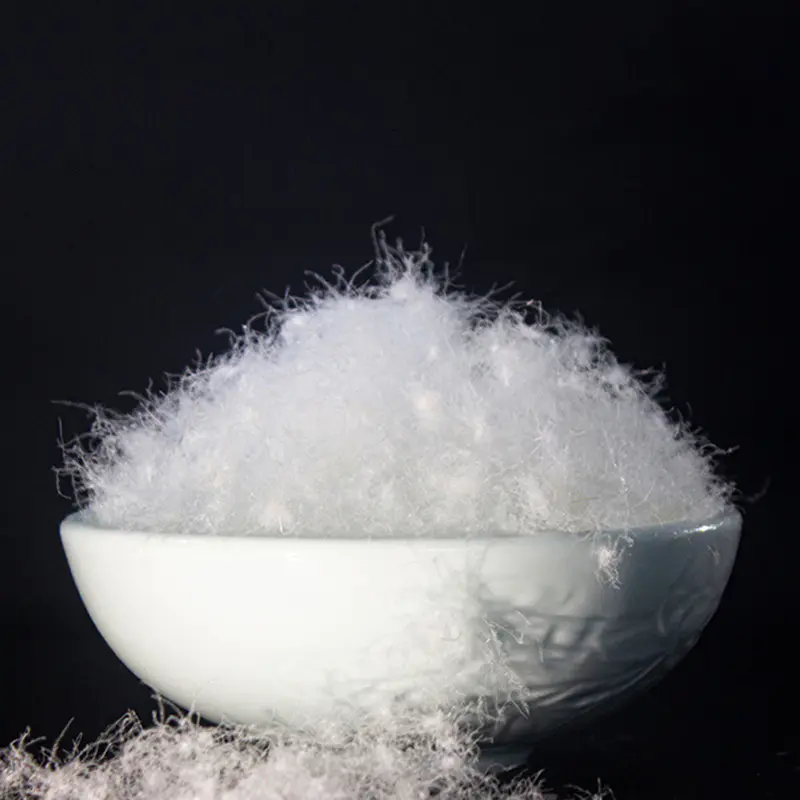
White goose down refers to the soft, fluffy clusters found beneath a goose's outer feathers, harvested specifically from white-feathered geese. These clusters trap air far more efficiently than feathers, which is what gives down its exceptional warmth-to-weight ratio in bedding, pillows, and outerwear.
Structure
Three-dimensional clusters trap air pockets for insulation, unlike flat feathers.
Source
Harvested from white-feathered geese, typically as a byproduct of the food industry.
Use
Common in comforters, pillows, and premium outerwear insulation.
White Goose Down vs. Gray Goose Down
White and gray goose down come from the same species and offer essentially identical warmth and performance — the difference is almost entirely about appearance. White down is preferred in bedding with light-colored or white shell fabric because it doesn't show through thinner, lighter-colored covers the way gray down can. Gray down performs just as well and is often sold at a lower price point, since white down commands a premium largely based on visual preference rather than functional superiority.
White Goose Down vs. Duck Down
| Factor | White Goose Down | Duck Down |
|---|---|---|
| Cluster size | Typically larger, more resilient clusters | Generally smaller clusters |
| Fill power range | Often reaches higher fill power ratings | Slightly lower typical range |
| Odor | Minimal when properly processed | Can retain more natural odor if not well cleaned |
| Price | Generally higher cost | More budget-friendly |
Comparison of white goose down and duck down.
Goose down vs duck down ultimately comes down to cluster size and loft potential. Geese are larger birds with larger down clusters, which tends to give goose down an edge in achievable fill power and long-term loft retention, while duck down offers a more accessible price point with only a modest trade-off in performance.
White Goose Down Fill Power
Fill power measures the volume, in cubic inches, that one ounce of down occupies when fully lofted — it's a measure of insulating efficiency, not total warmth or total down weight. Higher fill power means each cluster traps more air per ounce, so a garment or comforter can use less down by weight to achieve the same warmth, resulting in a lighter, more compressible product.
| Fill Power | Quality Tier | Typical Use |
|---|---|---|
| 550-650 | Standard | Everyday bedding and mid-range jackets |
| 650-750 | High quality | Premium comforters and quality outerwear |
| 750-900+ | Premium to ultra-premium | Luxury bedding and high-performance outdoor gear |
General white goose down fill power ranges and what they typically indicate.
White Goose Down Warmth and Insulation
Down's warmth comes from trapped air, not the down itself — the clusters create a layer of still air next to the body that resists heat loss far more effectively than the same weight of solid insulating material. This is why fill power matters more than total down weight when comparing warmth: a higher fill power product can be lighter overall while trapping just as much, or more, insulating air. That said, total fill weight still matters for total warmth in very cold conditions, since fill power measures efficiency per ounce, not the absolute amount of insulation in the finished product.
High Quality and Premium White Goose Down
High quality white goose down is typically defined by a combination of factors beyond fill power alone: cluster size and integrity, cleanliness (low residual oil and odor), and a high down-to-feather ratio with minimal broken quill content. Premium white goose down often comes from mature geese, since down clusters generally grow larger and more resilient as the bird matures, contributing to both higher achievable fill power and better long-term loft retention through repeated use and washing.
White Goose Down Quality Standards
Down quality is typically evaluated and certified against recognized standards that measure fill power, down/feather content ratio, cleanliness (oxygen number), and turbidity (a measure of cleanliness related to residual dust and oils). Reputable suppliers test and label down products against these standards, and increasingly against responsible sourcing standards that verify humane harvesting practices, which has become an important purchasing consideration alongside raw performance metrics.
How to Identify High Quality Goose Down
Check the fill power rating: look for a specific number rather than vague marketing terms like "premium" alone.
Look for down/feather ratio: higher percentages of down (versus feather) generally indicate better quality and loft.
Feel for loft recovery: compress a sample and check how quickly and fully it springs back — quality down recovers loft almost immediately.
Check for odor: well-processed, high-quality down should have little to no noticeable smell.
Look for standard certifications: third-party testing and responsible sourcing certifications add a layer of verified quality assurance.
Combining fill power with down/feather ratio and a hands-on loft check gives a much more reliable picture of quality than fill power alone, since two products with identical fill power ratings can still feel noticeably different in cluster quality and durability over time.
News Center
If you are interested in our products, please consult us
Contact Details
- Address : East 1st Floor, Building 3, No.3 Light Textile Road, Xucun Town, Haining City, Jiaxing City, Zhejiang Province
- Tel: +86-18133691685
- E-mail: [email protected]
Products
Quick Link
News Center
Mobile terminal

