
 English
 Español
 عربى
Home / News / Industry News / How Buyers Can Verify Down Fill Power and Species Claims Against IDFB or EN Tests

How Buyers Can Verify Down Fill Power and Species Claims Against IDFB or EN Tests
2026-11-25
A 700 fill power white goose down quotation can look precise and still leave a buyer with no usable proof. The number may come from an in-house cylinder, a hand-picked sample, or an old batch; the species name may come from a sales sheet. The first question is whether that number is tied to a named IDFB or EN test method, a sealed lot sample, and a laboratory report you can audit.
Content
- 1 The short answer: make method and sample the first gate
- 2 What an IDFB or EN report has to show
- 3 Fill power: a number without a method is not a specification
- 4 Species claims: microscope evidence beats a product name
- 5 How to audit a supplier without visiting the laboratory
- 6 Red flags in supplier documents
- 7 What to write into the purchase order
- 8 Answers buyers can use in supplier review
The short answer: make method and sample the first gate
A buyer verifies a down claim by requiring the supplier to state the exact test method, link the result to a sealed lot sample, and provide a report from a laboratory accredited to ISO/IEC 17025 for that method.
Working definition. Verification means evidence that the claimed fill power and species composition were measured on the supplied lot under a named International Down and Feather Bureau (IDFB) method or European Standard, not inferred from a product name or an internal procedure.
Ask for four documents before price negotiation:
- A method statement naming the standard, edition, and unit.
- An accredited test report with raw data, not a certificate with a grade only.
- A sample record with lot ID, seal number, sampling date, and storage condition.
- A retained sealed sample that the buyer can retest after delivery.
If one of those four items is missing, the claim is still a sales description. That is true for raw material and for finished filling products. The same discipline applies whether the quoted material is 50%, 80%, or 90% down content.
What an IDFB or EN report has to show
A usable report identifies the standard, the laboratory, the sample, the conditioning routine, the unit, and the result; a page with a logo and a fill power grade is not enough.
For fill power, the named method is normally an IDFB test method or EN 12130. For composition and species, buyers should see EN 12131 or the equivalent IDFB member-laboratory method, with down, feather, and species percentages reported separately. The laboratory must hold ISO/IEC 17025 accreditation for the specific test, not just for textile testing in general.
EN 12130Fill power method
EN 12131Composition method
ISO/IEC 17025Laboratory competence
Lot IDTraceability link
| Evidence item | Acceptable form | Red flag |
| Named method | IDFB method or EN 12130 / EN 12131 with edition | In-house method with no reference |
| Laboratory | ISO/IEC 17025 scope covering the test | Logo without an accreditation scope |
| Sample | Sealed lot sample, lot ID, date, mass | Golden sample with no lot link |
| Result | Raw data, units, conditioning, test date | Single grade such as 700+ |
| Species | Microscopic goose and duck percentages | White goose stated on the invoice only |
| Chain | Sampling record and retained sample | Report cannot be linked to delivery |
Fill power: a number without a method is not a specification
A fill power claim is comparable only when the method, conditioning, sample mass, and unit are the same; a 700 result from one method cannot be treated as a drop-in equivalent to a 700 result from another.
IDFB and EN 12130 do not exist to produce marketing grades. They define how the sample is conditioned, how the down is loaded, and how the result is read. Ask for raw data and the calibration status of the instrument. Check that the report belongs to the actual lot and not to a stock sample from a previous season.
Audit rule: accept a fill power claim only when the report states the method edition, unit, sample mass, conditioning time, and test date.
This matters in sourcing because fill power drives warmth-to-weight and fill weight. A buyer who compares 700 fill power from an unknown procedure with 700 fill power from EN 12130 is comparing two different measurements, not two prices for the same material.
Species claims: microscope evidence beats a product name
Species verification requires microscopic identification and a reported composition of goose and duck down; a label such as white goose down is a description, not proof.
Duck and goose down differ in the structure of barbules and nodes, and a trained microscopist can identify the species mix. A proper report lists goose and duck percentages alongside down and feather percentages. Ask for the species mix on the lot, not the category. If a supplier offers 90% pure white goose down, the report should show the goose share and the down content separately.
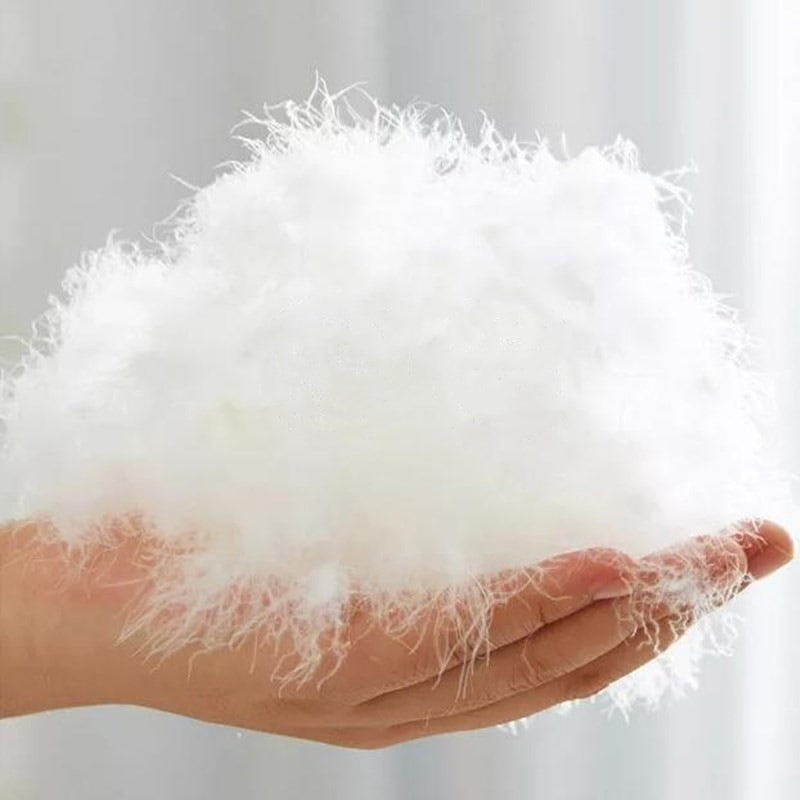 90% Pure White Goose Down FillingHigh-end goose down filling for woven garments and infant down clothing; ask for lot-specific species and down composition reports.View Product →
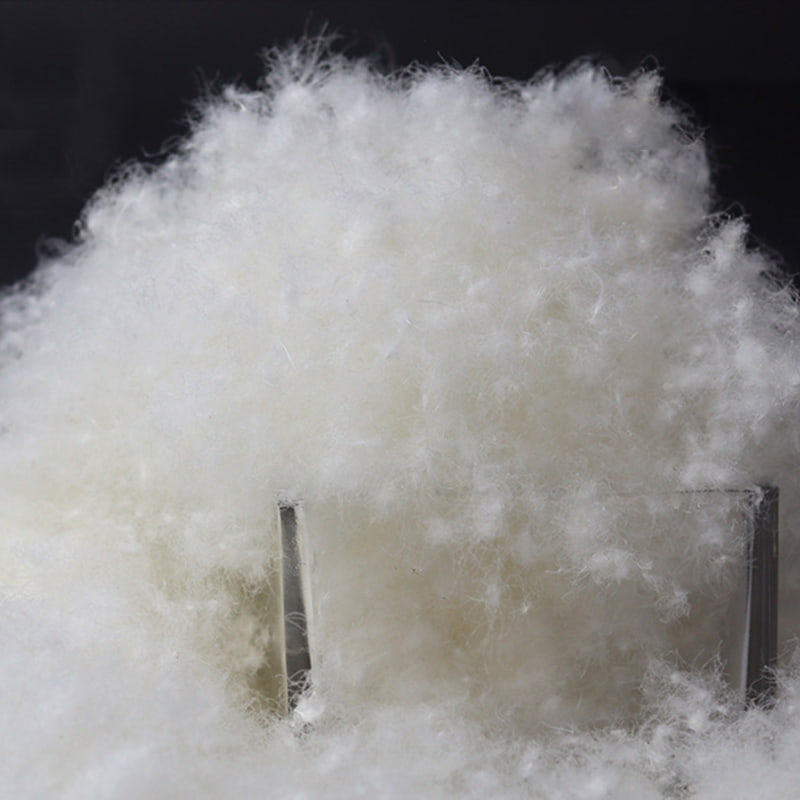 90% Pure White Duck Down FillingWholesale white duck down filling for woven garments; review lot-specific species mix and down content alongside fill-power claims.View Product →
For comparison, a 90% pure white duck down lot needs the same test trail. The product name is only a starting point. The buying decision should rest on a lot-specific report that names the species test and shows the composition on the sample that will ship.
How to audit a supplier without visiting the laboratory
A desk audit can confirm method, accreditation, sample chain, and raw data in under a week if the buyer requests the complete file before approving a lot.
The review follows a fixed sequence. A useful background reference is this guide to down certification and verification standards, but the supplier file still has to be checked item by item.
- Request the standard and edition in writing. IDFB equivalent is not a method statement.
- Match the laboratory ISO/IEC 17025 scope to the exact test. If the scope does not list EN 12130 or the relevant IDFB method, the report is outside scope.
- Check the sample seal, lot ID, sampling date, sample mass, and storage record. The sample must represent the bales behind the quotation.
- Compare raw data with the certificate of analysis. Confirm units and conditioning. A rounded grade without raw data cannot be audited.
- Retain a sealed reference sample and retest on arrival. File the result against the purchase order and the supplier lot.
Documentation depth: an illustrative audit ladder
Supplier statement
25
In-house report
50
Accredited report with lot ID
85
Accredited report and retained sample
100
Illustrative review depth, not a statistical sample or a test result.
Red flags in supplier documents
The strongest red flag is a claim that cannot be tied to a test method and a lot; the second is a report that changes between the quotation and the shipment.
Strong evidence
- Named standard and edition
- Accredited laboratory scope
- Sealed sample with lot ID
- Raw data and retained sample
Weak evidence
- In-house method only
- Report without a unit
- Sample from a golden bale
- Scope missing the test method
Keep the supplier FAQ and the test file in the same review folder. If the supplier cannot explain a number in plain terms, the document will not survive an audit or a customer claim.
What to write into the purchase order
The purchase order should make the test method, lot sample, report timing, and retest right contractual, not a matter of trust.
- Test method: IDFB method or EN 12130 for fill power, and EN 12131 or equivalent IDFB method for composition and species.
- Report timing: preliminary report before shipment and final report with the lot documents.
- Sample control: sealed sample from the production lot, retained for 12 months after delivery.
- Retest right: buyer may retest an arrival sample at an ISO/IEC 17025 laboratory and reject material outside the agreed tolerance.
- Change control: new raw material source, species mix, or washing line triggers a new report.
For hotel quilts, infant bedding, and outdoor jacket filling, the same rule applies. The fill power and species claims are only the first layer; fill weight, shell down-proofness, cleaning performance, and chemical safety may also need test evidence.
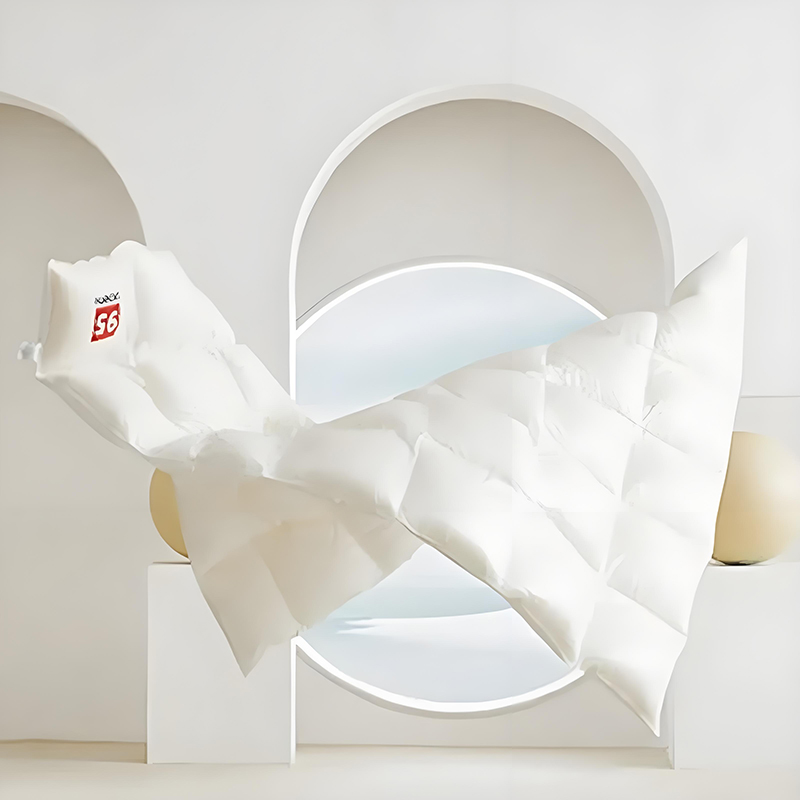 High Loft Maternal and Infant Grade Down Quilt FillingDuck down quilt filling for woven quilts, including infant bedding; verify loft and cleanliness with accredited laboratory reports.View Product →
Contract rule: a product name is not a specification. The purchase order should name the standard, the unit, the lot, the sample, and the acceptance limit.
Answers buyers can use in supplier review
Can an in-house test report verify fill power?
Only as a screening tool. For approval, require a report that names IDFB or EN 12130 and comes from an ISO/IEC 17025 accredited laboratory with that method in scope.
How should a buyer check a species claim?
Request microscopic species composition by lot, reported as goose and duck percentages alongside down and feather percentages. EN 12131 or an IDFB member-laboratory method gives the buyer a traceable basis.
How often should a buyer retest?
At least once per production lot and after any change in raw material source, species mix, or washing line. Keep sealed retain samples for each lot and file the result against the purchase order.
Is an IDFB report automatically accepted in Europe?
No. The buyer and supplier must agree on the method and unit in the contract. An IDFB result and an EN 12130 result should not be substituted without a documented conversion or a fresh test.
Final check: the report, the lot ID, and the sealed sample should all point to the same shipment. If they do not, the claim is not verified.
News Center
If you are interested in our products, please consult us
Contact Details
- Address : East 1st Floor, Building 3, No.3 Light Textile Road, Xucun Town, Haining City, Jiaxing City, Zhejiang Province
- Tel: +86-18133691685
- E-mail: [email protected]
Products
Quick Link
News Center
Mobile terminal

