

 English
 Español
 عربى
عربى
Home / News / Industry News / How Does Fluffy Down Jacket Filling Compare to Synthetic Insulation Materials?

How Does Fluffy Down Jacket Filling Compare to Synthetic Insulation Materials?
2026-01-20
Content
- 1 The Fundamental Nature of Insulation: Trapping Heat
- 2 Unpacking Fluffy Down Jacket Filling
- 3 The World of Synthetic Insulation Materials
- 4 Head-to-Head Comparison: Down vs. Synthetic
- 5 Making the Right Choice for Your Needs
- 6
- 7 Beyond the Basics: Hybrids and Innovations
- 8 Final Insights for the Informed Consumer
The Fundamental Nature of Insulation: Trapping Heat
At its core, the purpose of any jacket insulation is to prevent the loss of body heat by creating a barrier of trapped, still air. Both down and synthetic materials achieve this, but their methods and inherent properties differ dramatically. Understanding this foundational principle is key to evaluating their performance in various scenarios. The effectiveness of insulation is measured by its ability to resist heat flow, often quantified by its "clo" value or thermal resistance, and is directly influenced by the material's structure, density, and loft. This section delves into the basic science of how fluffy down jacket filling and synthetic alternatives function, setting the stage for a detailed comparison. It is crucial to recognize that no single material is universally superior; the optimal choice is a complex equation involving climate, activity level, humidity, durability needs, and personal ethics.
Unpacking Fluffy Down Jacket Filling
Natural down is the undercoating found on waterfowl like ducks and geese, consisting of a three-dimensional cluster of filaments emanating from a central point. This unique structure is responsible for its exceptional qualities.
What Constitutes High-Quality Down?
The performance of down is primarily graded by two metrics: fill power and fill weight. Fill power measures the loft or fluffiness—specifically, the volume in cubic inches one ounce of down occupies. Higher fill power (e.g., 800) indicates larger, more resilient clusters that trap more air relative to weight, offering greater warmth for less bulk. Fill weight is simply the total ounces of down used. A jacket with high fill power and adequate fill weight will be exceptionally warm and lightweight. Another critical factor is the down-to-feather ratio; pure down clusters loft better than feathers, which have quills and provide less insulation. Ethical sourcing, while not a performance metric, is an increasingly important consideration for many consumers, influencing the reputation and desirability of fluffy down jacket filling products.
Inherent Advantages of Down Insulation
The unparalleled warmth-to-weight ratio of down is its most celebrated advantage. For a given level of warmth, a down jacket will typically be lighter and more compressible than a synthetic one, making it a favorite for backpacking and situations where pack size and weight are critical. Furthermore, with proper care, down insulation can maintain its loft and effectiveness for decades, significantly outlasting most synthetic materials. Its breathability is also often higher, allowing moisture vapor from the body to escape more readily, which enhances comfort during dynamic activities in cold, dry conditions.
Recognized Limitations and Care Considerations
The most significant drawback of down is its performance when wet. Down clusters lose their loft when damp, matting together and providing minimal insulation. While treatments can improve water-resistance, a soaking wet down jacket becomes nearly useless until thoroughly dried—a process that can be slow. This makes down a less ideal choice for consistently damp, humid, or wet environments. Additionally, down requires specific care; it should be washed with gentle, non-detergent soaps and dried thoroughly, often with tennis balls to break up clumps. Some individuals may also have allergies to down or have ethical concerns regarding animal-derived products, which are important factors in the decision-making process.
The World of Synthetic Insulation Materials
Synthetic insulation consists of fine polyester fibers engineered to mimic the lofting structure of down. These fibers are arranged in different ways—such as short-staple, continuous filament, or sheet constructions—to create air pockets.
Common Types and Constructions
Synthetic insulations come in various forms, each with slightly different properties. Short-staple insulation, made from many small, fluffy fibers, is common and offers a good balance of warmth, compressibility, and cost. Continuous filament insulation uses longer, single fibers that are more durable and resistant to clumping after compression or washing. Sheet or non-woven constructions provide consistent warmth and are less prone to developing cold spots but may be less breathable. The development of high-loft synthetics aims to close the warmth-to-weight gap with down, though a complete parity has not been achieved. These materials are pivotal for those seeking durable synthetic jackets for wet climates, as their core strength lies in moisture resilience.
Core Strengths of Synthetic Fill
The defining advantage of synthetic insulation is its consistent performance in damp conditions. The polyester fibers do not absorb water in the same way down does; they retain much of their loft and insulating ability when wet, and they dry relatively quickly. This makes synthetic jackets a reliable choice for activities like skiing, snowboarding, or hiking in sleet or high humidity. Synthetics are also generally more affordable than equivalent down jackets and are hypoallergenic. They are easier to care for, as they can typically be machine-washed and tumble-dried without requiring the meticulous process needed for down. For anyone wondering about how to wash a puffer jacket without damaging it, synthetics offer a more forgiving maintenance routine.
Trade-offs and Long-Term Performance
The primary trade-off for synthetic's wet-weather prowess is its long-term durability. The fibers can break down and lose their resiliency over time, especially with repeated compression (like being stuffed in a backpack), leading to a gradual loss of loft and warmth. Synthetic jackets tend to be bulkier and heavier than down jackets of equivalent warmth. They also generally have a lower warmth-to-weight ratio, meaning you carry more weight for the same amount of insulation. While advances are being made, the lifespan of a synthetic jacket is typically shorter than that of a well-maintained down jacket.
Head-to-Head Comparison: Down vs. Synthetic
To make an informed choice, a direct, attribute-by-attribute comparison is essential. The following analysis breaks down the key performance factors, providing clear guidance for different user needs.
Warmth, Weight, and Packability
In dry, cold conditions, high-quality down is the undisputed champion of warmth for its weight. It offers superior loft and compresses into a smaller space, a critical factor for alpine climbing or long-distance backpacking where every ounce and cubic inch matters. Synthetic insulation provides good warmth but at a higher weight and bulk for the same thermal level. This is a key consideration for the best lightweight insulation for hiking, where down often holds the edge unless moisture is a persistent threat.
Comparison in sentence form: For a targeted insulation level in dry cold, a down jacket will be lighter and pack smaller than a synthetic jacket designed for the same temperature range.
| Attribute | Down Insulation | Synthetic Insulation |
|---|---|---|
| Warmth-to-Weight Ratio | Excellent (Superior loft per ounce) | Good to Fair (Heavier for equivalent warmth) |
| Compressibility | Excellent (Packs very small) | Fair to Good (Can be bulky) |
| Loft Retention Over Time | Excellent with proper care | Declines with compression and age |
Performance in Moisture and Durability
This is the most decisive category for many buyers. Synthetic insulation maintains its warmth when exposed to moisture, dries quickly, and is highly durable against abrasion in many constructions. Down, when wet, loses insulation rapidly and dries slowly, though treated down offers improved but not complete resistance. For warm winter coats for humid regions, synthetic or treated down is almost always the more practical recommendation. In terms of long-term durability, down's structure can last a lifetime if kept dry and clean, while synthetic fibers inevitably degrade.
Comparison in sentence form: A synthetic jacket will keep you warmer during a sudden snow squall or in damp coastal cold, whereas a wet down jacket becomes a liability in the same conditions.
| Attribute | Down Insulation | Synthetic Insulation |
|---|---|---|
| Performance When Wet | Poor (Loses loft, insulates poorly) | Good (Retains most loft, stays warm) |
| Drying Speed | Slow | Relatively Fast |
Cost, Care, and Ethical Factors
Synthetic jackets usually offer a lower entry price point and are easier to maintain, suiting budget-conscious consumers or those who prefer low-maintenance gear. Down jackets represent a higher initial investment but can offer better value over decades of use. Ethically, synthetic materials are vegan but are petroleum-based, while down is a natural byproduct but raises animal welfare questions; responsible sourcing certifications (like RDS) are important for down. Understanding down vs synthetic for extreme cold weather involves weighing these factors against the absolute thermal need, where dry, extreme cold often favors down, and variable, potentially wet cold favors premium synthetics.
Comparison in sentence form: The upfront cost of a down jacket is higher and its care regimen more involved, but its lifespan may justify the cost, whereas a synthetic jacket is cheaper upfront and easier to care for but will likely need replacing sooner.
| Attribute | Down Insulation | Synthetic Insulation |
|---|---|---|
| Initial Cost | Higher | Lower |
| Ease of Care | Requires delicate washing and thorough drying | Machine washable and easier to dry |
| Environmental & Ethical Profile | Natural, animal-derived; concerns over sourcing | Petroleum-based, vegan; concerns over microplastics |
Making the Right Choice for Your Needs
The decision between down and synthetic is not about finding a "winner," but about matching the insulation's properties to your specific activities, environment, and priorities. By asking a few key questions, you can navigate to the optimal choice.
Key Decision-Making Questions
Answering these questions will create a clear profile for your ideal jacket:
- What is your primary activity and climate? Is it dry, alpine cold, or damp, humid cold? Will you be generating a lot of sweat?
- How important are weight and pack size? Are you backpacking for days, or commuting from your car to an office?
- What is your budget and maintenance preference? Are you looking for a long-term investment you can care for, or a low-maintenance, affordable option?
- Are ethical or allergy considerations a factor for you?
Scenario-Based Recommendations
Based on common use cases, here are tailored recommendations:
For Alpine Climbing and Dry-Cold Backpacking
Choose high-fill-power down. The supreme warmth-to-weight and compressibility are critical for these weight-sensitive activities in typically dry conditions.
For Skiing, Snowboarding, and Wet Coastal Winters
Choose synthetic or water-resistant treated down. The high chance of encountering moisture—from snow, sleet, or humidity—makes synthetic's wet-performance the safer, more reliable choice. This directly addresses the need for warm winter coats for humid regions.
For Everyday Urban and Casual Winter Use
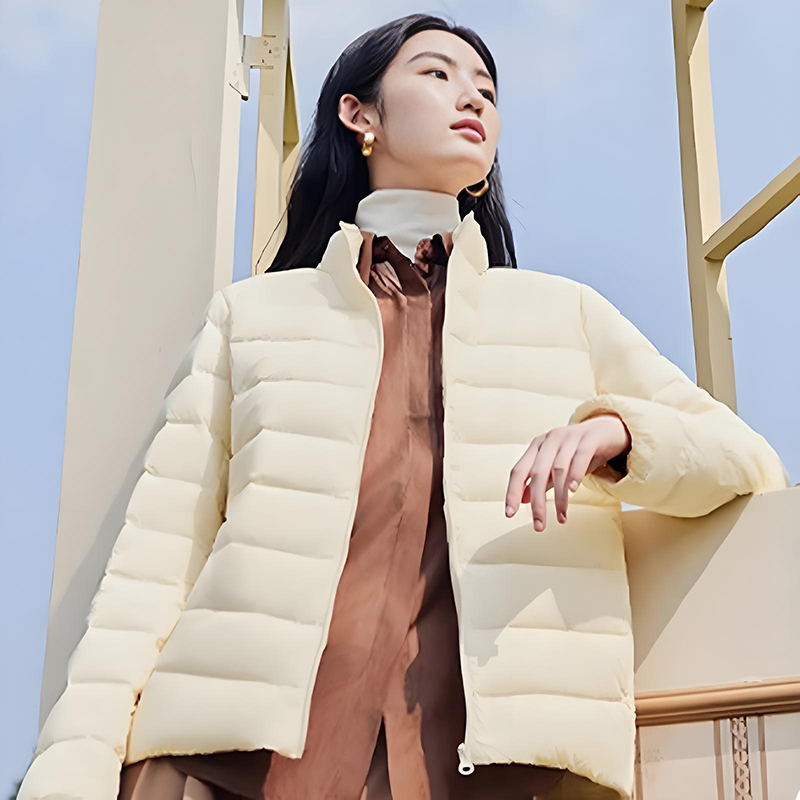
Both work well. Down offers a sleeker profile and potentially longer life. Synthetic is often more affordable, easier to wash, and fine for variable conditions when you're not far from shelter. A jacket with fluffy down jacket filling might be preferred for its classic look and feel, provided the climate is not excessively damp.
Beyond the Basics: Hybrids and Innovations
The industry is not static, and manufacturers are constantly innovating to blend the benefits of both materials and mitigate their weaknesses.
The Rise of Hybrid Insulation Designs
Many jackets now strategically place synthetic insulation in moisture-prone areas (like shoulders, cuffs, and hem) and down in the core torso panels for maximum warmth. This approach aims to offer the best of both worlds: lightweight warmth where it's needed most, and moisture resistance where it's likely to get wet. This is a sophisticated answer to the down vs synthetic for extreme cold weather dilemma, offering a balanced solution for mixed conditions.
Technological Advancements in Both Fields
Down has seen significant innovation with water-repellent treatments applied at the cluster level, creating "hydrophobic down" that resists moisture much better than untreated down, though it is not waterproof. On the synthetic side, new high-loft, fine-denier fibers and advanced sheet constructions are improving warmth-to-weight ratios and durability, bringing synthetics closer to down's performance in dry conditions. Furthermore, the development of recycled synthetic insulation and traceably sourced down are addressing environmental and ethical concerns from both sides of the aisle. For the consumer concerned with how to wash a puffer jacket without damaging it, these new materials often come with more robust and simple care instructions.
Final Insights for the Informed Consumer
Understanding the fundamental trade-off between down's unparalleled dry warmth and weight efficiency versus synthetic's reliable damp-weather performance and ease of care is the cornerstone of this decision. Your local climate and typical activities should be the primary guides. Consider your jacket as a tool for specific conditions: a precision instrument for dry cold, or a robust, all-weather workhorse. Whether you prioritize the premium performance and longevity of a well-made fluffy down jacket filling or the dependable, low-fuss utility of durable synthetic jackets for wet climates, the market offers excellent options. By aligning the material's inherent strengths with your personal needs, you invest not just in a piece of clothing, but in comfort, safety, and enjoyment of the cold seasons for years to come.
News Center
If you are interested in our products, please consult us
Contact Details
- Address : East 1st Floor, Building 3, No.3 Light Textile Road, Xucun Town, Haining City, Jiaxing City, Zhejiang Province
- Tel: +86-18133691685
- E-mail: [email protected]
Products
Quick Link
News Center
Mobile terminal

