

 English
 Español
 عربى
عربى
Home / News / Industry News / How to Clean Down Feather Pillows at Home Without Ruining the Fill: A Guide

How to Clean Down Feather Pillows at Home Without Ruining the Fill: A Guide
2026-10-16
A standard 50 x 75 cm down pillow weighs roughly 900 g dry and close to 3.5 kg the moment it comes out of a wash cycle. That single number is why pillow care goes wrong more often than duvet care: you are not cleaning fabric, you are trying to dry a waterlogged sponge sealed inside a tightly woven cotton shell.
Water rarely destroys a pillow. The damage happens in the twelve hours after the wash, when fill stays clumped, moisture sits in the core, and detergent residue strips the natural oils off every cluster. Dry a pillow properly and it returns to full loft. Rush it once and you get the two complaints that dominate every laundry forum: a musty smell that will not leave, and fill that feels like gravel.
3.5 kg
Wet weight of one standard down pillow
1 tsp
Maximum mild liquid detergent per pillow
2-3
Low-heat dryer cycles normally required
Content
- 1 Why a Wet Down Pillow Is Harder to Fix Than It Looks
- 2 Read the Fill and the Shell Before Anything Gets Wet
- 3 The Wash Cycle: Six Steps That Keep Loft Intact
- 4 Drying Is Where Most Down Pillows Are Ruined
- 5 Fixing a Musty Smell and Flat, Clumped Fill
- 6 How Often Down Pillows Need Washing and Replacing
- 7 For Buyers: What to Specify in a Washable Pillow Fill
- 8 Frequently Asked Questions
Why a Wet Down Pillow Is Harder to Fix Than It Looks
A down pillow fails after washing for one of three reasons: the core stays wet, detergent stays inside the shell, or the drying heat runs too high. Every one of those failures is predictable, and every one is preventable.
Down clusters owe their insulation to trapped air. Once water replaces that air, the clusters collapse and mat into dense pockets in the middle of the pillow. A tightly woven shell makes the problem worse, because wet cotton fibres swell and close the weave, cutting off the airflow that would normally carry moisture out. A 15 cm thick pillow can therefore spend a full hour in a tumble dryer with a bone-dry surface and a still-damp core.
40 C
Upper limit for wash water. Above this, the natural oils in the fill degrade and odour sets into the shell.
That is also why a pillow can smell musty three days after a wash that seemed completely successful. It is not a detergent problem. It is a drying problem that only shows up late, when the fill has been sitting damp against itself for long enough for mildew to take hold.
Definition
Fill power is the volume, in cubic inches, that one ounce of down occupies after it is fluffed. A 600 fill power pillow and an 800 fill power pillow hold the same weight of fill but very different amounts of trapped air, which is why the higher grade dries faster and recovers loft more completely after every wash.
Read the Fill and the Shell Before Anything Gets Wet
There is no single washing rule for down feather pillows, because down, feather, blends and synthetic fills behave differently in water. The care label plus a two-second pinch test on the shell tells you which routine applies.
| Fill type | Behaviour when wet | Wash cycle | Drying |
| 100% down, 550-800 fill power | Clumps into dense wet pockets, slowest to dry | Delicate, low spin | Low heat, 2-3 cycles |
| 80/20 down and feather blend | Springs back faster, quills keep the structure open | Delicate, extra rinse | Low heat, 2 cycles |
| 100% feather | Dense but drains well, firmest feel | Gentle, low spin | Low to medium heat |
| Polyester or cluster fibre | No clumping, dries in a single cycle | Any cycle | Low heat, 30-45 min |
The shell deserves the same attention. Check the seams by pressing along each one: if fill escapes under light pressure, the pillow will shed clusters through the whole wash and dry cycle, and that lint will clog a dryer filter within minutes.
A down-proof shell is a tightly woven, calendered fabric whose weave stops 2 mm clusters from migrating out. Once quills start appearing on the surface, the fabric has lost that property, and the pillow should be replaced rather than washed.
A dense, tightly woven shell also takes far longer to dry than the fill inside it, which is why shell construction, not fill weight, usually sets the real drying time.
The Wash Cycle: Six Steps That Keep Loft Intact
A down pillow can go into a washing machine, provided you use a mild liquid detergent, keep the water at or below 40 C, choose a delicate cycle with a low spin, and add at least one extra rinse.
- Check the label and the seams first. If fill escapes under light pressure, hand-wash the pillow in a bathtub or replace it.
- Wash two pillows at a time. A single wet pillow can unbalance the drum and finish the cycle with a lopsided fill.
- Use one teaspoon of mild liquid detergent. Powder detergent leaves residue, and fabric softener coats the clusters and flattens loft within one or two washes.
- Set 30 to 40 C water and a delicate or gentle cycle with a low spin speed.
- Run a second rinse. This is the step most people skip and the one that prevents the sour smell.
- Add a final spin so the pillow enters the dryer holding as little water as the machine can remove.
If you also launder comforters, the same detergent and temperature limits apply. Our down and feather laundering guide walks through the duvet version of this routine step by step.
Drying Is Where Most Down Pillows Are Ruined
Dry a down pillow on low heat with two clean tennis balls or dryer balls, expect two to three cycles, and stop every 20 minutes to break up clumps by hand.
The tennis balls are not a gimmick. They beat the fill apart while it tumbles, which lets warm air reach the core instead of drying the same outer 2 cm over and over. Stop the machine regularly, feel for lumps, and pull them apart with your fingers before restarting.
Typical dry time for a 50 x 75 cm pillow, low heat
Practical ranges from home and hotel laundry practice. Exact times depend on fill weight, shell tightness, load size and drum volume.
A pillow is finished only when the core feels warm, free of lumps, and springs back the moment you squeeze it. Let it cool for 20 minutes before the pillowcase goes back on: a pillow that flattens as it cools was still damp inside, and it will smell within a week.
Hotel laundries take the opposite route. They dry bedding in high-temperature tunnel finishers, so the fill has to survive cycles that would ruin a home-washed pillow. Fills developed for that duty rating, including the high-temperature drying hotel bedding fill produced by Zhejiang Shengjie Down Products Co., Ltd., are specified for repeated industrial laundering rather than a single gentle home cycle.
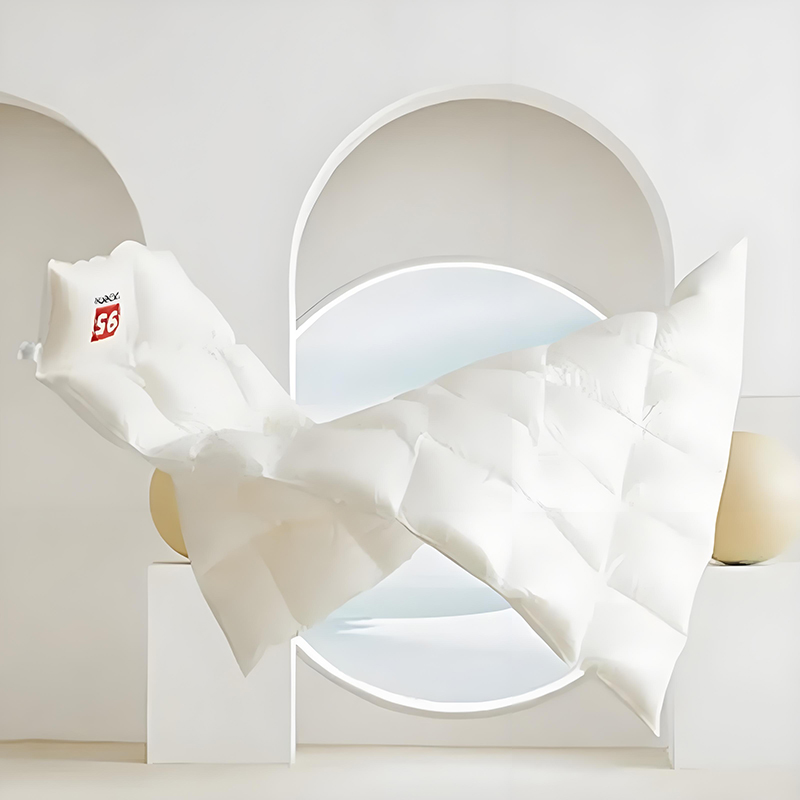 High-Temperature Drying Hotel Down Quilt Filling for All SeasonsA hotel down quilt fill designed to withstand repeated high-temperature drying, suited to all-season bedding where dampness and mildew risk matter.View Product →
Fixing a Musty Smell and Flat, Clumped Fill
Mustiness means the core stayed damp. Rewash the pillow with 120 ml of white vinegar added to the rinse cycle, then dry it completely again; if the smell returns within a week, the fill has mildewed and cannot be recovered.
Two myths are worth clearing up. Sunlight does not sterilise a pillow, because UV light only reaches the surface while the wet core stays exactly as it was, and strong sun can yellow the shell. Equally, a short hot cycle does not reset a pillow: heat above 40 C degrades the oils that keep down flexible and leaves it brittle.
What saves a pillow
- Two extra rinse cycles at the end of the wash
- Dryer balls or tennis balls in every drying cycle
- Manual clump-breaking every 20 minutes
- A full 20-minute cool-down before use
What ruins a pillow
- Fabric softener or bleach in any amount
- Water or drying heat above 40 C and 60 C
- Stopping the dryer while the core is still warm and damp
- Line drying a soaked pillow in a cold room
For buyers specifying bedding that should never develop odour in the first place, the fix belongs at the fill stage rather than the laundry stage. Zero-odour, antibacterial and anti-mite fills are washed and graded so that residual organic matter stays low enough to resist mildew even when a hotel or a household under-dries the item once.
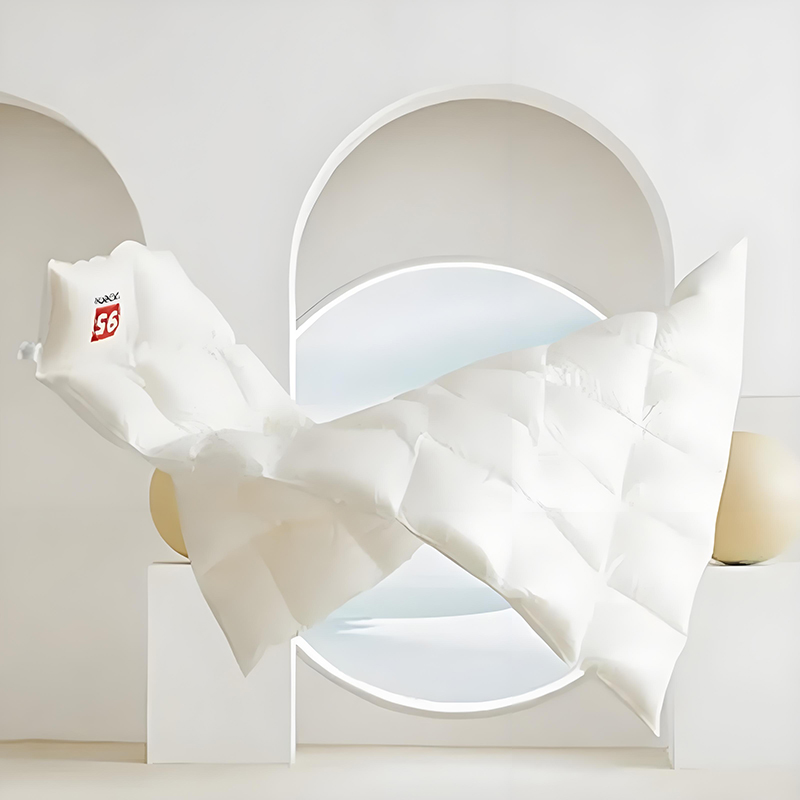 Zero-Odor Antibacterial Anti-Mite Down Filling for Winter DuvetsA winter duvet down fill presented as zero-odour, antibacterial and anti-mite, relevant when bedding must resist odour without relying on frequent laundering.View Product →
How Often Down Pillows Need Washing and Replacing
Wash down pillows every 6 to 12 months, air them for two to three hours once a month, and replace feather pillows after three to five years and high fill power down pillows after five to eight.
- Use a pillow protector and wash that every two weeks instead of the pillow itself.
- Air pillows monthly in a dry room, not in direct sunlight, to release trapped moisture.
- Spot-clean the shell between full washes with a damp cloth and mild soap.
- Replace the pillow when a folded pillow does not spring back within three seconds, or when fill stays lumpy after two proper washes.
A feather pillow that has gone flat is not dirty, it is worn. Quills break down with age and stop supporting the shell, and no washing routine restores a fill that has physically lost its structure.
For Buyers: What to Specify in a Washable Pillow Fill
Three numbers decide whether a pillow fill survives repeated home laundering: fill power with a tight tolerance, cleanliness readings, and an odour grade.
| Parameter | Typical acceptance value | Why it matters |
| Fill power | 600-800, tolerance around 5% per shipment | Controls loft, warmth and drying speed |
| Oxygen number | 10.0 mg per 100 g or lower | Residual organic matter; high values track with odour |
| Turbidity | 500 mm or higher | Measures how clean the washed fill really is |
| Moisture content | 13% or lower | Prevents mould during shipping and warehouse storage |
| Odour | No objectionable odour after 24 hours in a sealed bag | Predicts how the finished pillow behaves after one wash |
A 90% pure white duck down grade with consistent fill power is the usual starting point for a pillow that must survive a domestic machine, because the high cluster content drains faster and rebuilds loft with fewer dryer cycles than feather-heavy blends at the same weight.
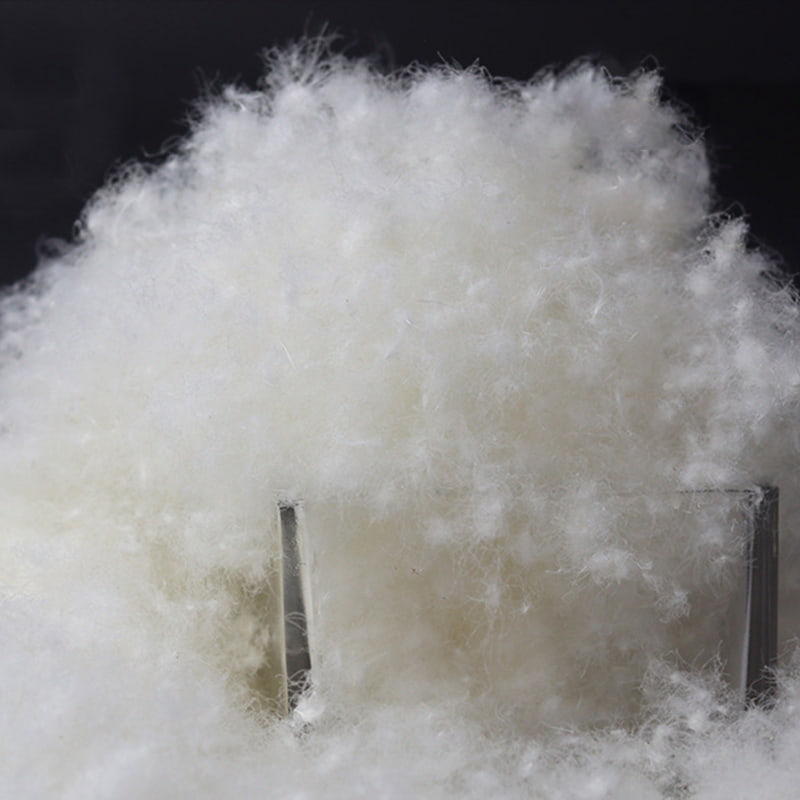 90% Pure White Duck Down Filling GradeA 90% white duck down fill with detailed purity, loft and cleanliness specifications, useful for comparing grades in down bedding sourcing.View Product →
Buyers comparing grades can also review the down pillow and bedding sourcing questions maintained by Zhejiang Shengjie Down Products Co., Ltd., which cover cleanliness testing, fill power tolerances and wash-durability expectations for bedding fills.
Frequently Asked Questions
Can down feather pillows go into a washing machine?
Yes, when the shell is intact and the fill is genuine down or feather rather than foam. Use a delicate cycle, water at or below 40 C, one teaspoon of mild liquid detergent, and two rinse cycles. Pillows with torn seams or exposed quills should be replaced instead.
How do you dry a down pillow without a tumble dryer?
Air drying works, but it takes two to three days in a warm, ventilated room with the pillow turned and reshaped twice a day. Never dry a wet down pillow in a cold, closed space, because the core stays damp and mildew develops before the shell feels dry. Finish with 20 minutes of low-heat tumbling if a dryer is available at any point.
Why does my pillow smell after washing?
The smell is almost always trapped moisture rather than detergent. Rewash the pillow with 120 ml of white vinegar in the rinse cycle, then dry it until the core is warm and completely clump-free. If the odour returns within a week, the fill has mildewed internally and the pillow should be discarded.
How long should a down pillow last?
Feather pillows typically hold their shape for three to five years, and high fill power down pillows for five to eight when washed once or twice a year and aired monthly. A pillow that stays flat after two proper washes has reached the end of its service life.
News Center
If you are interested in our products, please consult us
Contact Details
- Address : East 1st Floor, Building 3, No.3 Light Textile Road, Xucun Town, Haining City, Jiaxing City, Zhejiang Province
- Tel: +86-18133691685
- E-mail: [email protected]
Products
Quick Link
News Center
Mobile terminal

