

 English
 Español
 عربى
عربى
Home / News / Industry News / Can You Wash Down Feather Pillows? Safe Washing, Drying, and Fill Care

Can You Wash Down Feather Pillows? Safe Washing, Drying, and Fill Care
2026-10-09
Ask five pillow manufacturers whether you can wash down feather pillows and you will get two answers: a cautious yes on a gentle cool cycle, or a firm no unless the spill is an emergency. Both camps are partly right, and the deciding factors are measurable rather than mysterious.
A soaked 20 by 26 inch pillow can weigh three to four times its dry weight, because down clusters trap water in the air spaces between the barbs while feathers hold it along the quill. Washing is the simple part. Getting that water out of the fill completely is the part that decides whether the pillow comes back to life.
1 to 2 Home washes per year is the practical ceiling for a down or feather sleeping pillow before loft loss becomes noticeable.
Content
- 1 The Short Answer: Yes, With Three Conditions
- 2 Down and Feather Are Not the Same Fill and Do Not Wash the Same Way
- 3 Water Temperature and Detergent Chemistry Decide the Outcome
- 4 Drying Is Where Most Pillows Fail
- 5 How Often Should You Wash Down Feather Pillows?
- 6 For Buyers: Specifying Fill and Ticking That Survive Repeated Washing
- 7 When a Pillow Should Be Replaced Instead of Washed
- 8 Frequently Asked Questions
The Short Answer: Yes, With Three Conditions
Most down and feather pillows can be machine washed, as long as three conditions are met: the water stays at or below 30 °C, the detergent is mild and low-sudsing, and the dryer runs until the fill is genuinely dry rather than merely warm on the outside.
30 °C Maximum wash water temperature. Above 40 °C the protein structure of down and feather begins to break down.
2 max Pillows per load, so the drum can move them freely. A packed drum tears baffles and seam stitching.
90-150 min Typical total low-heat drying time for one pillow, spread across two to four separate dryer cycles.
What makes the answer conditional rather than absolute is the fill mix. A pillow with more than 30 percent feather content is denser, holds more water and needs longer in the dryer. Some makers of feather-only pillows advise against washing altogether, because feathers carry natural oils that wick moisture away from the head. Strip those oils with a strong alkaline detergent and the pillow ends up heavier, flatter and slower to dry.
Down and Feather Are Not the Same Fill and Do Not Wash the Same Way
Down and feather come from the same birds, but once they are wet they behave like two different materials, and that difference should drive how you clean them.
Down
Quill-free clusters that trap air and are graded by fill power. A 700 fill power pillow may need only 14 to 16 ounces of fill, and it releases water faster because there are fewer hard quills to hold it.
Feather
Larger, stiffer fibres with a visible quill that add bulk and resilience. A feather pillow typically holds 20 to 24 ounces of fill, absorbs more water, and needs a noticeably longer drying run.
Fill power is the volume in cubic inches that one ounce of down occupies under a standard load. A 600 fill power grade is solid commercial quality, 700 and above is premium, and the higher the number, the less fill weight a pillow needs to reach the same height. A feather pillow reaches its loft through bulk instead, which is exactly why it weighs more and takes longer to dry.
Down is the insulation; feather is the structure. Washing changes the second far more than the first, which is why a high-down pillow recovers its loft after a wash while a feather pillow slowly does not.
Loft retained after ten gentle wash and low-heat dry cycles
Indicative ranges drawn from down processing practice. Real results depend on fill power, ticking quality and how completely the fill dries.
The pattern is consistent: the higher the down content, the better the fill tolerates repeated laundering. Pillows built on 90 percent white duck down clusters, for example, keep their height through a decade of annual washing, while a feather-dominant pillow loses measurable loft within four or five cycles.
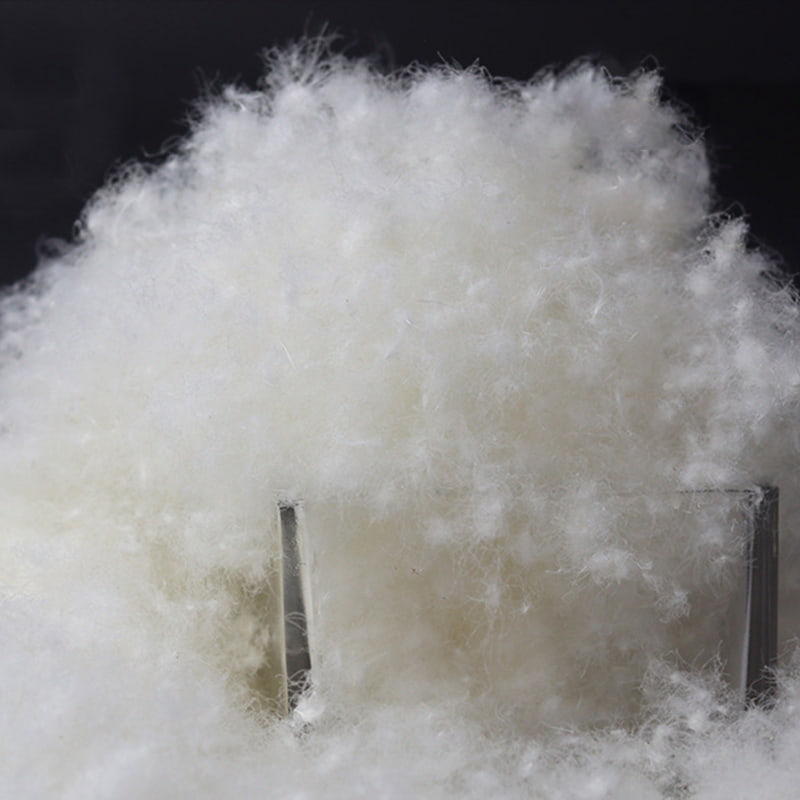 90% Pure White Duck Down Filling for Woven Down ClothingHigh-down-content white duck down filling for woven down clothing; its loft is best preserved with mild detergent and cool laundering.View Product →
Water Temperature and Detergent Chemistry Decide the Outcome
Wash at 30 °C or below with a mild, low-sudsing detergent, and always add a second rinse. Heat above 40 °C begins to degrade the keratin that gives down and feather their spring, and alkaline laundry products strip the natural oils that keep the fill supple.
| Fill type | Wash water | Detergent | Dryer heat | Rinse |
| 90% white goose down | 30 °C, gentle cycle | Mild, neutral pH | Low, 50-55 °C | Double rinse |
| 80% pure white duck down | 30 °C, gentle cycle | Mild, neutral pH | Low, 50-55 °C | Double rinse |
| 50% duck down | 30 °C, gentle cycle | Mild, low-suds | Low, 50-55 °C | Double rinse |
| Feather-heavy fill | 30 °C, hand wash preferred | Mild, low-suds | Low, extended run | Double rinse |
Four products never belong in the wash water: chlorine bleach, which oxidises the fibre and yellows it; fabric softener, which coats the barbs and flattens the loft; dry-cleaning solvent, which dissolves the natural oils; and a top-loading machine with a central agitator, which wrings the fill against the ticking and weakens the seams.
Drying Is Where Most Pillows Fail
Damp fill is the single cause of most failed home washing attempts, because the outside of a pillow dries long before the clusters at the core do. Work through these steps in order and the fill will come back to full height.
- Run a full, slow spin cycle before the pillow leaves the machine. Removing surface water up front shortens the drying stage by a third or more.
- Move the pillow straight to the dryer with two or three wool dryer balls or clean tennis balls. They break up clumps mechanically instead of relying on heat.
- Set low heat at 50 to 55 °C and run a 40 minute cycle. High heat dries the ticking first and traps moisture inside the fill.
- Pull the pillow out, break any remaining clumps by hand along the seams, and return it for another cycle. Two to four cycles is normal.
- Finish with the spring-back test. Fold the pillow in half, release it, and count: a fully dry down or feather pillow returns to shape within two seconds.
If the pillow still smells faintly musty once it is cool, it is not dry. Cool it down completely before the final check, because warm fill hides residual dampness that reappears the following morning.
How Often Should You Wash Down Feather Pillows?
Once a year is enough for a home pillow, and twice a year is the practical maximum. Washing more often accelerates exactly the loft loss the fill cannot recover from.
- Wash the pillowcase weekly and the pillow protector monthly. Most body oil, sweat and dust sits on the outer layers, not inside the fill.
- Use a zippered protector from day one. It is a cheap replaceable layer that absorbs wear the pillow itself cannot.
- Feather-heavy pillows: 18 to 24 months between washes, or spot clean only.
- Hospitality and institutional use: 30 to 50 laundry cycles is the realistic service life of a down pillow before the fill is replaced.
Hotel housekeeping departments replace down pillows on a cycle count, not a calendar. Once a pillow has been through 50 commercial washes, its fill height is typically 15 percent below the original specification.
That cycle logic applies at home too. If you are washing a pillow because it has gone flat rather than because it is soiled, no amount of detergent will restore it, and each wash makes the next one less effective.
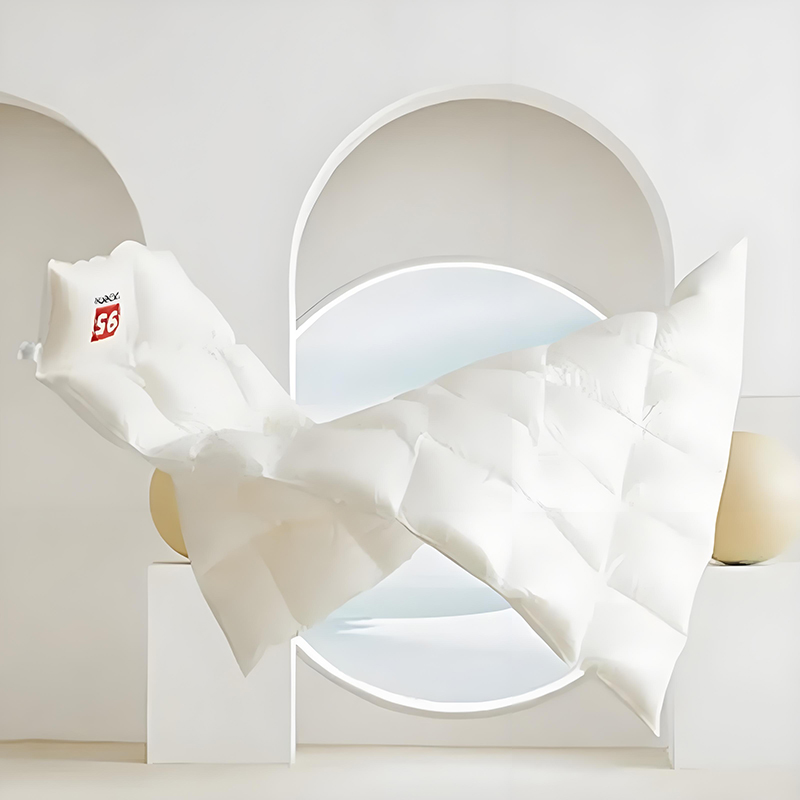 Cost-Effective Hotel Down Quilt Filling for All-Season UseHotel down quilt filling designed for easy care and high-temperature drying; specifying fill and ticking together supports longer washing durability.View Product →
For Buyers: Specifying Fill and Ticking That Survive Repeated Washing
Washing durability is decided at purchase, in the fill specification and the ticking, long before the first laundry cycle. Buyers who specify both correctly get three to four years of service; buyers who specify only the fill get one.
Fill specification that survives repeated laundering
- Fill power of 600 to 800 for pillows: higher fill power needs less fill weight to reach the same height and dries faster.
- Turbidity of at least 500 mm and an oxygen number at or below 10 mg per 100 g, the cleanliness measures used in down trading.
- A top-class odour rating after steaming, because wet fill amplifies any residual smell that a dry pillow conceals.
Ticking matters as much as the fill. A 100 percent cotton down-proof shell with a thread count of 400 or more and a calendered finish keeps quills inside the pillow instead of poking through the fabric after ten washes. Baffle box construction with walls of 2 to 3 cm holds the fill in place when it is wet and heavy, while stitch-through construction compresses flat in the same conditions. Double-stitched seams at a minimum of eight stitches per inch are the last line of defence against fill escaping into the drum.
Zhejiang Shengjie Down Products Co., Ltd., a down processor based in Haining, Zhejiang with more than 20 years of production experience, grades white goose down, grey goose down, pure white duck down and grey duck down from 50 percent to 90 percent down content for exactly these applications, and supplies filling specifications for quilts, outerwear and sleeping bags. Buyers who need the acceptance criteria in writing can start from the down filling FAQ before requesting samples.
 High-Loft Duck Down Filling for Maternal and Infant QuiltsDuck down quilt filling with high loft and heat-locking structure; processed with maternal-infant-grade cleaning agents and low-temperature drying.View Product →
When a Pillow Should Be Replaced Instead of Washed
Four signs mean the pillow is finished, and washing will cost you detergent, water and an afternoon without fixing anything.
- Yellow or brown staining that survives a full wash cycle. That is oxidised protein and body oil bonded to the fibre, not surface dirt.
- Quills poking through the ticking. The down-proof weave has failed, and every wash widens the gaps.
- A musty smell that returns within a day or two of a complete dry, which points to microbial growth inside the fill.
- No spring-back. If the pillow stays folded after you release it, the cluster structure is gone.
Expected service life under normal use with a protector and annual washing runs 2 to 3 years for a feather pillow and 3 to 5 years for a high fill power down pillow. Past that point, replacement is cheaper than another wash.
Frequently Asked Questions
Can you wash down feather pillows in a top-loading washing machine?
Only if the machine has a gentle or hand-wash setting without a central agitator running. A standard agitator twists the pillow against the drum, which splits baffles and forces fill through the ticking. Front-loading machines or top-loaders without an agitator are the safer choice.
How can you tell when a down feather pillow is completely dry?
Let it cool to room temperature, squeeze the centre, and listen for any clumping sound. Then fold the pillow in half and release it. If it returns to shape within two seconds and has no damp or musty smell at the seam, the fill is dry. If not, run another low-heat cycle.
Does washing remove the natural oils from feather pillows?
Partially, and only if you use a strong alkaline detergent or bleach. A mild, neutral-pH detergent at 30 °C removes soil while leaving most of the natural oils intact. The bigger risk to the fill is incomplete drying, not the wash itself.
How long does a down feather pillow last if you wash it once a year?
A high fill power down pillow used with a protector and washed once a year typically holds its loft for 3 to 5 years. Feather-heavy pillows last 2 to 3 years. Beyond that, fill height drops below the level at which the pillow can support the neck properly.
News Center
If you are interested in our products, please consult us
Contact Details
- Address : East 1st Floor, Building 3, No.3 Light Textile Road, Xucun Town, Haining City, Jiaxing City, Zhejiang Province
- Tel: +86-18133691685
- E-mail: [email protected]
Products
Quick Link
News Center
Mobile terminal

