

 English
 Español
 عربى
عربى
Home / News / Industry News / Can Down Feather Pillows Be Washed? A Practical Washing and Drying Guide

Can Down Feather Pillows Be Washed? A Practical Washing and Drying Guide
2026-10-01
A pillow that once felt tall and springy now lies flat, smells faintly stale, and shows a yellow ring on the casing. That is usually the moment someone finally asks whether down feather pillows can be washed, half expecting the answer to be no. It is not. The filling inside your pillow has met water many times before it ever reached your bed, because processors wash and rinse raw down repeatedly to strip out dust, debris, and natural oils. Household laundering simply repeats a step the material already knows. What ruins down and feather fill is not the wash cycle. It is moisture that never fully leaves the pillow.
Water is not the enemy of down and feathers. Moisture that stays trapped inside the filling is.
Content
- 1 Can Down Feather Pillows Be Washed? The Short Answer
- 2 What Happens Inside a Pillow During a Wash Cycle
- 3 How to Wash Down and Feather Pillows Step by Step
- 4 Drying Down Feather Pillows: The Step That Decides the Outcome
- 5 When Not to Wash a Down or Feather Pillow
- 6 Choosing a Fill That Survives Washing: Notes for Buyers
- 7 Frequently Asked Questions
Can Down Feather Pillows Be Washed? The Short Answer
Yes. Down feather pillows are machine washable at home, and they should be washed every three to six months to remove the sweat, body oils, and dust that migrate through the casing. The hesitation comes from a misplaced fear: people picture soaked clumps of filling and assume the pillow is finished. In practice, clumping is a drying problem, not a washing problem, and it is almost always preventable.
Key definition
Down is the soft, three-dimensional undercoating of a goose or duck, made of light branching clusters with no quill. Feathers are the outer covering, built around a firm central quill that adds support but also absorbs and holds water. Most pillows blend the two, which is why drying time, not washability, is the real variable between them.
3-6months between washes
2-3dryer cycles per wash
1 tbspmild detergent per load
0fabric softener, ever
Regular laundering also protects the investment. Unlike foam, a down or feather pillow can be fully washed rather than only spot cleaned. Treat the casing gently, dry the filling completely, and the same pillow keeps working for years.
What Happens Inside a Pillow During a Wash Cycle
Inside the drum, warm water and mild detergent do two useful jobs: they dissolve the body oils that make filling clump, and they flex every cluster, which is what restores loft once the pillow dries. How the filling behaves through that cycle depends on what is inside the pillow.
Down clusters
- Dry noticeably faster, because there is no quill to trap water
- Spring back to full loft when fluffed by hand or machine
- Lose resilience when detergent residue coats them, hence the extra rinse
- Tolerate gentle machine cycles without structural damage
Feather quills
- Hollow central shafts soak up water and release it slowly
- Need the longest drying time of any common pillow fill
- Add firm support that pure down cannot provide
- Develop a sour smell if dried slowly or incompletely
Fill grading matters here as well. Larger, higher-content clusters flex and recover better after soaking, which is one reason a 90 percent fill behaves so differently from a budget blend. For the technical background, our guide to pillow fill types and fill power explains how species, cluster size, and down content are graded.
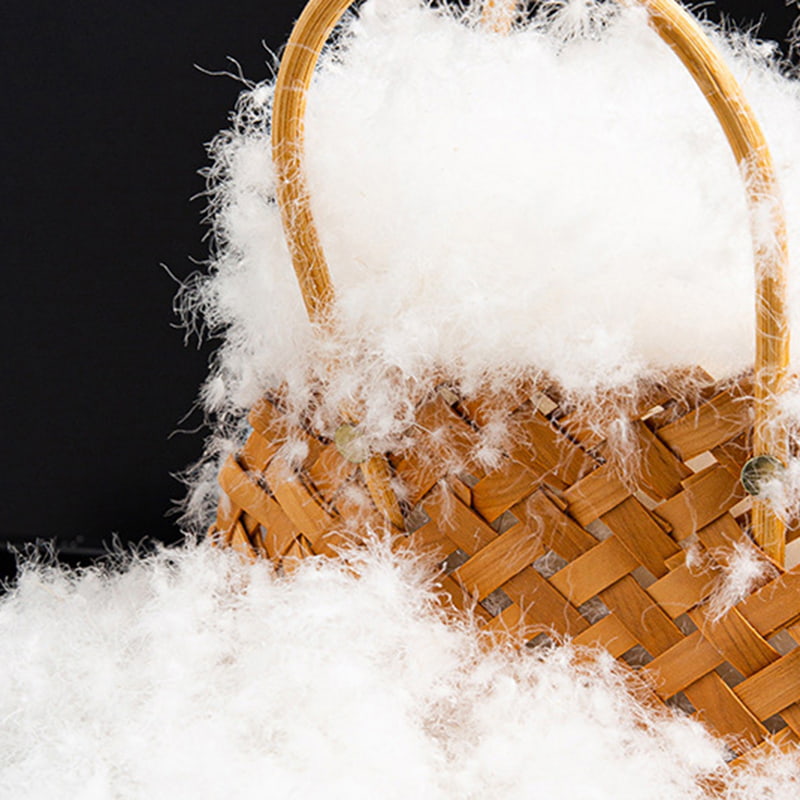 90% White Goose DownOriginated from the core down-producing areas of the abdomen, neck and wings of selected white geese, the natural down has a delicate reed-like clustered structure, fo...View Product →
How to Wash Down and Feather Pillows Step by Step
Wash two pillows at a time on a gentle cycle with warm water and a mild, low-suds detergent, add an extra rinse, and run a second spin before anything goes near the dryer. The full sequence looks like this.
- Inspect the casing first. Check every seam and mend loose stitching, because a small opening becomes a fill leak under water. If the fabric is worn thin, retire the pillow instead.
- Load for balance. Two pillows keep the drum balanced and ensure both are soaked and rinsed evenly. A single pillow thrashes and can throw the machine off balance.
- Dose carefully. One tablespoon of mild, low-suds detergent is enough for a pair of pillows. Skip fabric softener entirely, since it coats clusters and permanently flattens loft.
- Choose gentle cycle and warm water. Warm water, roughly 86 to 104 degrees Fahrenheit, lifts body oils without shocking the filling. Add the extra rinse if your machine offers one.
- Spin twice. An additional spin cycle forces out far more water than dryer time ever could, which shortens the most fragile stage of the process.
| Setting | Recommended practice |
| Water temperature | Warm, roughly 86 to 104 degrees Fahrenheit |
| Detergent | Mild and low-suds, about one tablespoon per load |
| Fabric softener | None, because it coats clusters and cuts loft |
| Load | Two pillows per cycle to keep the drum balanced |
| Cycle and spin | Gentle cycle, plus an extra rinse and a second spin |
| Frequency | Every 3 to 6 months, or sooner after spills |
Drying Down Feather Pillows: The Step That Decides the Outcome
Most pillows described as ruined by washing were actually ruined by incomplete drying. Damp clusters cling together in clumps, feather quills sour as they sit, and mildew can take hold within a day or two of trapped moisture. Dry the filling fully, and the same wash becomes routine maintenance instead of a gamble.
Tumble dry on low heat with two or three wool dryer balls, and expect two to three full cycles for a standard pillow. Between cycles, pull the pillow out, knead any lumps apart with your fingers, and redistribute the filling. Low heat, constant tumbling, and physically breaking up clumps together return the fill to an even, airy state; heat alone does not.
Loft recovery after one wash cycle, by drying method
Low-heat tumble with wool dryer balls95%
Low-heat tumble without balls82%
Air-dry flat, turned often64%
Air-dry hung on a line45%
Approximate recovery seen in practice; slow air drying also multiplies clumping and odor risk.The clap test After each dryer cycle, press the pillow hard with both hands, then let go. If it springs back to full thickness with no lumps and no cool, damp core, it is dry. If it does not, keep drying.
Commercial laundries prove the point daily. Hotels launder down-filled bedding on industrial schedules and dry it hard at high temperatures, and fills specified for hotel programs are chosen partly for that tolerance. One example of a fill engineered for exactly that regime appears below.
 Easy To Care For, High Temperature Drying, General Use In All Seasons, Cost-Effective HoteOriginating from the abdomen, neck and wings of ducks and geese, the down is like light reed petals, delicate and soft, while the feathers are in regular sheets. As a...View Product →
When Not to Wash a Down or Feather Pillow
Skip the wash and replace the pillow when the casing is damaged, the filling stays clumped after a complete drying cycle, or the pillow no longer supports your neck. Washing cannot reverse clusters that have broken down, and it cannot cure mildew that has taken up residence in damp fill.
- Torn seams or thin, worn casing fabric, since the wash cycle will force fill out through the gap
- Lumps that survive thorough drying, a sign the clusters have matted or broken
- A musty or sour smell that returns within days, which points to mildew deep in the filling
- Yellow staining combined with brittle, dusty clusters that shed instead of springing back
- Flattening that returns within hours of fluffing, meaning the fill no longer traps air
With regular washing and complete drying, a quality down or feather pillow stays serviceable for five years or more, and its washability is exactly why it outlasts foam cores, which can only be spot cleaned. More practical care answers are collected in our down and feather FAQ.
Choosing a Fill That Survives Washing: Notes for Buyers
For buyers and product developers, wash tolerance comes down to three things: cluster size, down content, and the cleanliness of the raw material before it is sewn into a finished product. Large clusters flex under water and spring back; higher down content means fewer water-holding quills; properly washed and rinsed raw fill leaves less residue and less odor risk the first time a consumer launders the piece.
Grading down is the core business at Zhejiang Shengjie Down Products Co., Ltd., a processor in Haining, Zhejiang with more than twenty years of production experience, and the same grading logic that predicts warmth also predicts how a fill behaves after its first wash. A 90 percent white duck fill, for example, is a common specification for washable bedding programs because it pairs high loft with a manageable drying time.
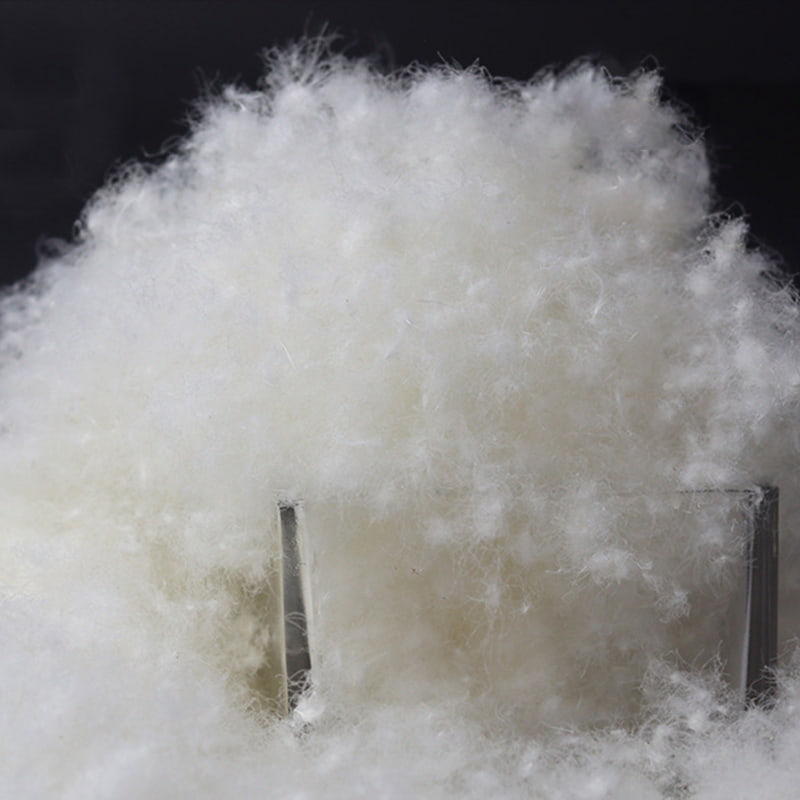 90% Pure White Duck DownOriginated from the duck's abdomen, neck, wings and other high-quality down-producing parts, the down presents a natural reed-like clustered shape with excellent fluff...View Product →
Frequently Asked Questions
How often should down feather pillows be washed?
Every three to six months, or roughly two to four times a year. Wash sooner after spills or when the pillow smells stale. A washable protector stretches the interval, but it does not replace washing the pillow itself, because oils still migrate through any casing.
Why does my pillow smell after washing?
Lingering odor almost always means residual moisture or detergent left inside the filling. Run another low-heat cycle with dryer balls, then air the pillow for a full day. If the smell survives complete drying, the filling has likely matted or mildewed and is ready for replacement.
Can down feather pillows go in the dryer?
Yes, and they should, because tumble drying is the safest way to remove deep moisture. Use low heat, add wool dryer balls, plan on two to three cycles, and knead out lumps between cycles. High heat saves little time and stresses the casing seams.
Is it better to wash an old pillow or replace it?
Wash it if the casing is intact and the filling still springs back after drying. Replace it when lumps, odor, or flattening survive a complete wash-and-dry cycle. A well-made down or feather pillow typically serves five or more years with regular laundering.
News Center
If you are interested in our products, please consult us
Contact Details
- Address : East 1st Floor, Building 3, No.3 Light Textile Road, Xucun Town, Haining City, Jiaxing City, Zhejiang Province
- Tel: +86-18133691685
- E-mail: [email protected]
Products
Quick Link
News Center
Mobile terminal

