

 English
 Español
 عربى
عربى
Home / News / Industry News / How Down Feathers Are Collected: Methods, Processing, and Sourcing Standards

How Down Feathers Are Collected: Methods, Processing, and Sourcing Standards
2026-09-10
A heavyweight winter parka can carry well over 200 grams of down, yet one goose gives up only a few dozen grams of the material in a single collection cycle. That gap between what a garment needs and what a bird can supply is the reason the down trade exists at all, and it is why buyers who understand how down feathers are collected write tighter specifications and negotiate from strength.
Down reaches the market through three routes: it is harvested after slaughter as a by-product of the meat industry, gathered by hand during the natural molt, or pulled from live birds, a practice every major certification now bans. Most commercial fill takes the first route, most certified fill documents that route in full, and the paperwork behind the claim has become as commercially important as the loft numbers on the spec sheet.
80%Roughly four fifths of the world's down supply is produced in Asia, so collection and processing standards are a regional reality before they are a brand promise.
Content
What Down Is and Where It Grows on the Bird
Definition
Down is the soft, three-dimensional undercoating that grows beneath the outer feathers of ducks and geese. Unlike a feather, a down cluster has no stiff quill shaft; it is a branching structure that traps air in place, which is precisely the property insulation buyers pay for.
On the bird, down grows on the chest, the lower belly, and the flanks, the areas that folded wings do not cover, and collectors work those regions because that is where the densest clusters sit. Down also represents a minor share of total plumage by weight, which explains the arithmetic above: a single production run consumes the output of many birds collected over many cycles.
Species and color matter at this stage as well. Goose clusters are typically larger and loftier than duck clusters, white plumage carries a premium because stray dark points show through light shell fabrics, and grey lots trade at a discount suited to dark-shell products. For a wider view of species and cluster structure, this guide to the types of down and feathers used in bedding and apparel is a useful next step.
The Three Ways Down Feathers Are Collected
Three methods account for effectively all commercial down, and the differences between them surface directly in welfare audits, price lists, and test reports.
| Method | How it works | When it happens | What buyers should know |
| Post-slaughter harvest | Plumage is removed after the bird is processed for meat; many plants scald carcasses in hot water for one to three minutes to loosen feathers first | At slaughter, typically around 15 weeks of age for meat geese | Supplies most commercial volume; fast, thorough drying after removal protects cluster quality |
| Molt gathering | Workers collect loose clusters by hand from the chest and belly while the bird sheds naturally | During the molt, with some flocks gathered up to four times a year | Lowest-stress route when handled well; yields smaller, cleaner lots that earn a premium |
| Live plucking | Feathers are pulled from restrained live birds outside the molt window | Outside natural molting periods | Prohibited by every major standard; causes pain and skin injuries; excluded from certified chains |
RDS
The Responsible Down Standard (RDS), the Global Traceable Down Standard, Downpass, and the International Down Standard all prohibit live plucking and force feeding, and each requires traceability from the farm through to the finished lot. A supplier who cannot map a batch back through that chain is selling a logo, not a guarantee.
From Bird to Bale: Washing, Sorting, and Grading
Collection is only the first step of the journey; what appears on a test report is decided by the washing, sorting, and grading line that follows it.
- Sort raw plumage by species, color, and size before anything touches water, since mixing lots at this stage contaminates everything downstream.
- Wash in repeated detergent cycles, often four to six rounds, until the water runs clear and the material passes an odor check.
- Rinse and dry at high temperature, which sterilizes the fill and re-inflates the clusters.
- Separate clusters from small feathers in sorting chambers until the lot reaches its target ratio, such as 90 percent down to 10 percent feather.
- Test down content and fill power under International Down and Feather Bureau (IDFB) methods, then bag the lot with a batch number that follows it to the customer.
Two bales can carry the same 90 percent label and still test differently on loft, and the washing and drying line is usually where that gap is born.
A finished premium lot, graded and tested after exactly this sequence, looks like this:
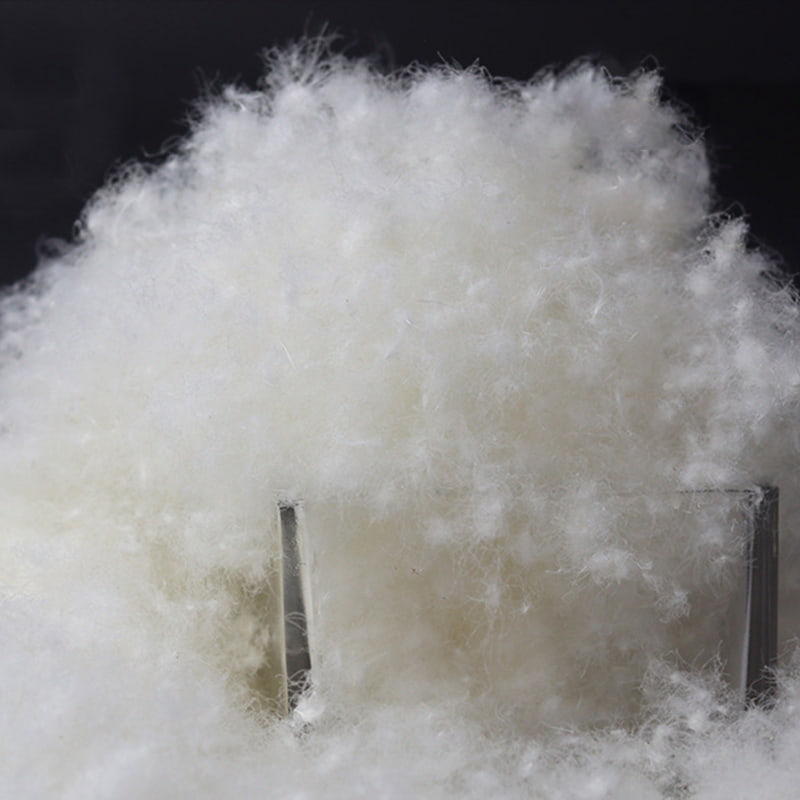 90% Pure White Duck DownOriginated from the duck's abdomen, neck, wings and other high-quality down-producing parts, the down presents a natural reed-like clustered shape with excellent fluff...View Product →
Why Collection Method Shapes Price, Ethics, and Supply
Collection method sets the ethical floor of a down lot, and scarcity sets its price ceiling; both forces are visible in the market data.
$5.0BGlobal down market value in 2020
$7.5BProjected market size by 2027
6%Implied compound annual growth between the two
Global Down Market Value
2020202320252027
ReportedEstimated or projected
Global down market value in USD billions; 2020 and 2027 figures from Audubon's industry reporting, 2023 and 2025 interpolated at the implied growth rate.
Demand is growing faster than traceable supply, which means the documents behind a lot now move prices as much as the loft numbers do.
Gathering routes earn premiums precisely because they are slower and more labor-intensive, while post-slaughter volume keeps base prices stable. Certification is where those two markets split, so before committing budget, read how responsible down certification standards are verified in practice.
How to Verify Sourcing and Choose the Right Grade
Verification is a paperwork exercise and grade selection is a heat-to-budget decision; treat them as two separate checks and both become easier to manage.
Check the Chain Before You Check the Price
- Ask for species and color breakdowns in writing for every lot, for example white duck, grey duck, or white goose.
- Request down content and fill power test reports from an independent laboratory working to IDFB methods, not in-house numbers alone.
- Confirm the collection claim explicitly: meat-industry by-product, no live plucking, no force feeding.
- Check the scope and validity dates of certificates instead of accepting a logo on a quotation.
- Commission an independent retest on arrival lots before releasing final payment.
If a supplier cannot produce lot-level test reports within one working day, the collection story behind the fill is already weak.
For premium outerwear and bedding programs, this is the benchmark grade:
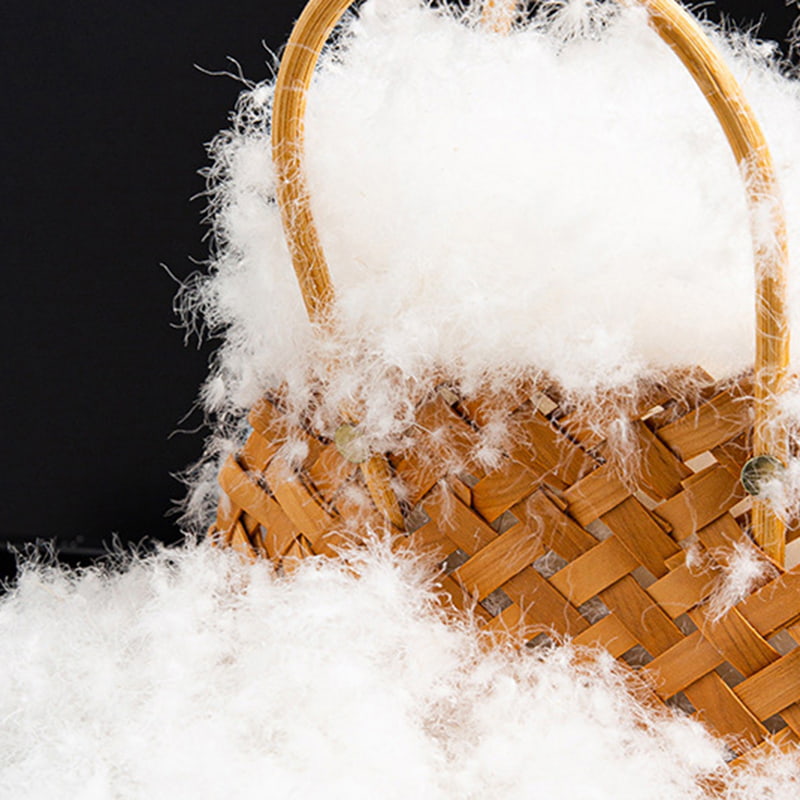 90% White Goose DownOriginated from the core down-producing areas of the abdomen, neck and wings of selected white geese, the natural down has a delicate reed-like clustered structure, fo...View Product →
Match the Grade to the End Product
Down content percentages describe the weight ratio of clusters to small feathers in the lot, and each band maps to a clear use case:
- 50 percent down: the value band, still warm for its weight, common in budget comforters and entry-price jackets.
- 80 percent down: the volume band, the balance point of loft, weight, and cost for mainstream apparel and hotel bedding.
- 90 percent down: the premium band, maximum cluster ratio for high-end outerwear, mountaineering gear, and heavyweight quilts.
For cost-sensitive bulk programs, grey duck down holds the value end of that matrix:
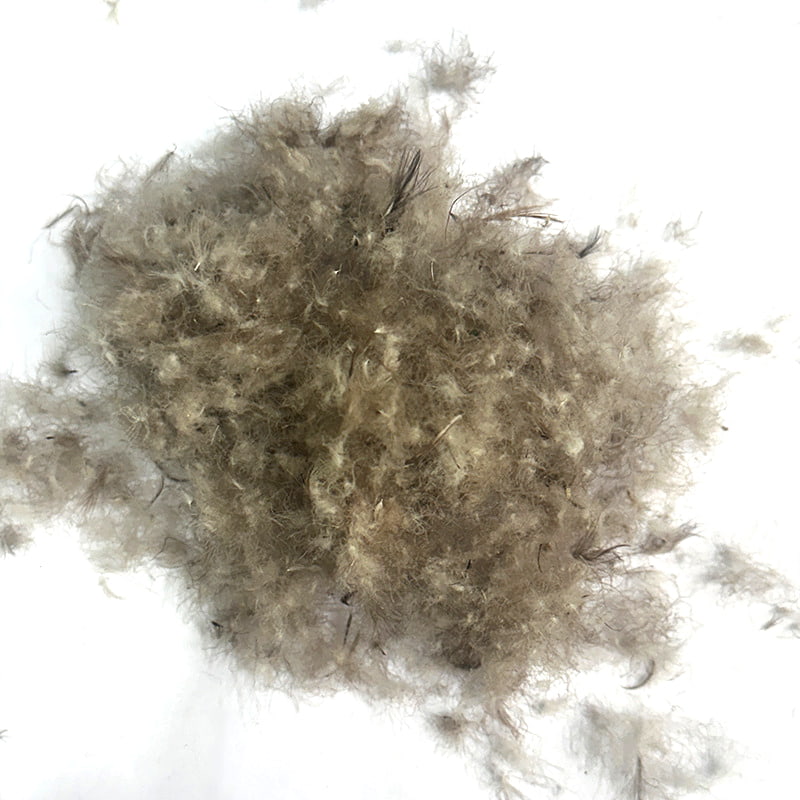 80% Grey Duck DownThe fine down from the abdomen, neck and wings of high-quality grey ducks is carefully selected. The down has a natural reed-like fluffy structure, forming a natural w...View Product →
Frequently Asked Questions
How are down feathers collected without harming birds?
The low-harm routes are post-slaughter harvesting and molt gathering. In the first, plumage is removed after the bird has been processed for meat. In the second, workers collect clusters the bird sheds naturally during molting, a cycle some flocks go through up to four times a year.
Is live plucking still part of the down industry?
It survives in untracked corners of the trade, but every major standard, including the Responsible Down Standard, Downpass, and the Global Traceable Down Standard, prohibits it and audits against it. Buying certified, traceable fill is the practical way to keep it out of your supply chain.
What does a 90 percent down grade actually mean?
It means 90 percent of the lot weight is down clusters and roughly 10 percent is small feather material, confirmed by laboratory testing. It is a composition ratio rather than a direct measure of loft, which is why fill power is always reported separately.
Which regions supply most commercial down?
Asia dominates volume, with China as the largest producer, while European goose lots from countries such as Hungary and Poland occupy the premium end of the market. Proximity to the poultry meat industry, not down demand alone, decides where supply sits.
News Center
If you are interested in our products, please consult us
Contact Details
- Address : East 1st Floor, Building 3, No.3 Light Textile Road, Xucun Town, Haining City, Jiaxing City, Zhejiang Province
- Tel: +86-15669300665
- E-mail: [email protected]
Products
Quick Link
News Center
Mobile terminal

